Showing posts with label Classic children's literature. Show all posts

Friday, August 03, 2012

Introducing Youngsters to the Ancient Classics

Shakespeare, Chaucer, Homer, Virgil. All these names make the hearts of English majors like me beat a bit faster. I love reading the greats but when it comes to introducing these masters to children, my heart beats a bit faster with anxiety. Introducing classic literature to children is a bit of a balancing act. On one hand you want to challenge your children but how do you do this without overwhelming them with stories that are complex, intricate, and dense? Can you encourage a child to fall in love with advanced stories without overwhelming them with too much detail? That problem is one of the challenges of using a literature approach to teaching. But, the good news is that there are extremely talented authors who have brilliantly adapted some of the most famous stories from these authors and made them approachable for young children. While some may decry the use of adaptations, I have found that they are wonderful tools in that these simplified versions allow you to introduce classic works to students at a young age. This creates a curiosity about the original and prepares them to read the original works. It breeds a familiarity with plot and character that enables them to delve into the complexities of the original works when they reach an appropriate age. So, today, I want to share with you some of my favorite adaptations of the classics.


Taking the works of that great original storyteller, Homer, Padraic Colum has adapted the stories of Iliad and the Odyssey into an accessible format while maintaining the lyrical integrity of the original text. The drama of Odysseus epic journey, the intrigue of the cunning gods and goddesses of Greek mythology, the clanging battles, it all come alive in this excellent adaptation. The book also benefits from lovely line sketches by Willy Pogany, as seen below.


Geared for students in 5-8th grade, this will provide an exceptional introduction to the greatest classic epic!


Another Padraic Colum classic, also illustrated by Willy Pogany, this adaptation relates the adventures of Greek hero Jason. Padraic takes on this classic of Greek mythology and relates all the wonder and strangeness of this storied world. The tales offer an introduction to the pantheon of Greek mythical figures from Hercules to Orpheus to Theseus. Aimed at readers in 5th-8th grade. 


Taking the oldest recorded story in the world, Geraldine McCaughrean's version is a free adaptation from a variety of translations and it preserves the intrigue and adventure that make this work so well-loved. The work was originally carved on twelve stone tablets which, over thousands of years, were smashed into thousands of shards. Even now, for all the painstaking work of restoration, different scholars place the events of the story in different orders, and some episodes are still lost. Gilgamesh is thought to have been a real king reigning sometime between 3200BC and 2700BC over the Sumerian city of Uruk, in Mesopotamia (now Iraq). He led expeditions into neighboring territories, to fetch back timber for his grand building projects. The story of the Flood - several floods devastated the region - found its way into other cultures, ultimately into the Bible, undergoing changes according to the religion of the teller. The work of archaeology is incomplete; some of the tile fragments still baffle interpreters. This edition makes the work accessible to readers over the age of 10 years and if you would like further information on interpretation, check out our study guide for teaching the work using a Charlotte Mason approach. 


The original war diaries of Julius Caesar are a historian's treasure trove. They contain details of war, everyday life, Roman social order, and much more. But, for a young reader they can be quite dense so Olivia Coolidge's brilliant version brings the richness of detail to life for intermediate readers. Using the original diaries as her guide, she writes her version from the perspective of a young soldier serving Caesar in his quest for European domination. While much easier to read than the original, this is best for readers over the age of 10 or 11.


This has become a classic in its own right and I cannot think of a better way to introduce the complex world of Greek mythology to middle schoolers. Vibrantly illustrated, I remember spending hours pouring over these strange, intriguing, and fascinating stories. Greek mythology is a complex science and this book provides access into the imaginative world, provides a window into the beliefs of the ancient Greeks, and is just plain entertaining. 

I hope this provides a useful guide to some of the best adaptations of ancient classics. In the near future I will write a post on my favorite children's versions of more recent texts such as Chaucer's Canterbury Tales and Shakespeare's tragic plays. 

Friday, July 13, 2012

Caldecott Medal Classics

As we discussed in our previous entry What is a Classic? there are many wonderful Newbery Medal winners. Now to the Caldecotts. The Caldecott has been awarded each year since 1938 and is given by the Association for Library Service to Children, a division of the American Library Association, to the artist of the most distinguished American picture book for children. This award is distinct from the Newbery in that it is awarded for aesthetic achievement only. That being said, there are some absolutely wonderful books in the list of winners. And it's so important for children to be exposed to quality illustration. It helps develop a sense of beauty, it fuels the imagination, and encourages students to express themselves in drawing, painting, and other mediums. Here are a few of our favorite Caldecott Medal winners.


 Abraham Lincoln by Ingri & Edgar Parin d'Aulaire, 1940 Caldecott Medal Winner


They Were Good and They Were Strong by Robert Lawson, 1941 Caldecott Medal Winner


Paddle-To-The-Sea by Holling C. Holling, 1942 Caldecott Honor Title


Make Way for Ducklings by Robert McCloskey, 1942 Caldecott Medal Winner


Yonie Wondernose by Marguerite de Angeli, 1945 Caldecott Honor Title


Blueberries for Sal by Robert McCloskey, 1949 Caldecott Honor Title


Song of the Swallows by Leo Politi, 1950 Caldecott Medal Winner 


America's Ethan Allen by Stewart Holbrook and illustrated by Lynd Ward, 1950 Caldecott Honor Title


One Morning in Maine by Robert McCloskey, 1953 Caldecott Honor Title


The Steadfast Tin Soldier by Hans Christian Andersen, illustrated by Marcia Brown, 1954 Caldecott Honor Title


The Thanksgiving Story by Alice Dalgliesh, illustrated by Helen Sewell, 1955 Caldecott Honor Title


Chanticleer and the Fox illustrated by Barbara Cooney, 1959 Caldecott Medal Winner


Thy Friend, Obadiah by Brinton Turkle, 1970 Caldecott Honor Title


Noah's Ark by Peter Spier, 1970 Caldecott Medal Winner


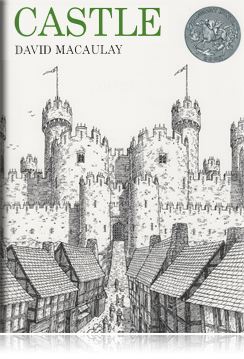
Castle by David Macaulay (Houghton), 1978 Caldecott Honor Title


Owl Moon by Jane Yolen, illustrated by John Schoenherr, 1988 Caldecott Medal Winner


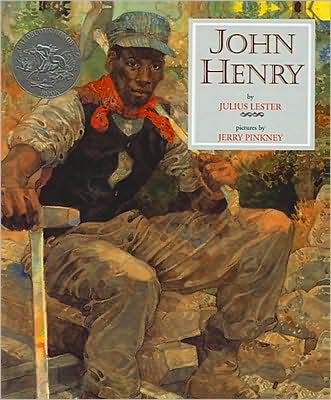
John Henry by Julius Lester, illustrated by Jerry Pinkney, 1995 Caldecott Honor Title

The Man Who Walked Between the Towers by Mordicai Gerstein, 2004 Caldecott Medal Winner

The Invention of Hugo Cabret by Brian Selznick, 2008 Caldecott Medal Winner
As you can see there are some absolutely gorgeous titles in this list. Books like this are all wonderful additions to your library as you will find your children returning again and again to look at the pictures, notice new details, and relish the beauty found on these pages. I would love to hear what books you remember from your childhood due to the illustrations. One of my personal favorites is Wilfrid Gordon McDonald Partridge, I love Julie Vivas's joyful watercolors. 
So chime in! Share your favorites. And we will be back with more award winning titles in the future. 

Wednesday, July 11, 2012

What is a classic?

While many people are able to name their favorite books or reference a generally accepted list of "classics" when asked, it is worth considering what makes a book worthy of the description. Of course, there are those classics that endure the test of time, the Bible, The Iliad, Pride and Prejudice. And there are those books that are marketed as "modern classics" like The Five People You Meet in Heaven. I'm not sure what makes a "modern classic" as I do believe that the test of time is a worthy one, but what about the books that are our personal classics? In choosing these books, I think that Italian writer, Italo Calvino presents key criteria in his book Why Read the Classics. He has 14 points by which he thinks the classics should be evaluated. Many of these are subjective and would allow a reader to choose his or her "own" classics based on these points. You can read all 14 points here but I would like to share my favorites:
  • The classics are those books about which you usually hear people saying: 'I'm rereading...', never 'I'm reading...'
  • The classics are those books which constitute a treasured experience for those who have read and loved them; but they remain just as rich an experience for those who reserve the chance to read them for when they are in the best condition to enjoy them.
  • The classics are books which exercise a particular influence, both when they imprint themselves on our imagination as unforgettable, and when they hide in the layers of memory disguised as the individual's or the collective unconscious.
  • A classic is a book which with each rereading offers as much of a sense of discovery as the first reading. 
  • A classic is a book which even when we read it for the first time gives the sense of rereading something we have read before.
  • A classic is a book which has never exhausted all it has to say to its readers.
  • Classics are books which, the more we think we know them through hearsay, the more original, unexpected, and innovative we find them when we actually read them.
  • 'Your' classic is a book to which you cannot remain indifferent, and which helps you define yourself in relation or even in opposition to it.
  • A classic is a work that comes before other classics; but those who have read other classics first immediately recognize its place in the genealogy of classic works.
  • A classic is a work which relegates the noise of the present to the background hum, which at the same time the classics cannot exist without.
I am interested in what you think of these criteria in relationship to children's books. For my family and our many hours of reading together, I think there were a few "classics" that really stand out in my memory; books that showed us what "classic" meant when applied to stories. We all loved The Little House in the Big Woods and Ralph Moody's Little Britches is a definite classic.

For those of you who want to build a library of children's classics, it is worth looking for Newbery and Caldecott award winners. Since 1921 the Newbery has been awarded each year to recognize "the most distinguished American children's book published in the previous year." It is generally a very reliable indicator of quality content–especially for those books published between 1945-1970. Here are a few of our favorites:

The Trumpeter of Krakow by Eric P. Kelly, 1929 Newbery Medal Winner

The Forgotten Daughter by Caroline Dale Snedecker, 1934 Newbery Honor Title

Call it Courage by Armstrong Sperry, 1941 Newbery Medal Winner

Blue Willow by Doris Gates, 1941 Newbery Honor Title

The Matchlock Gun by Walter D. Edmonds, 1942 Newbery Medal Winner


George Washington's World by Genevieve Foster, 1942 Newbery Honor Title

Adam of the Road by Elizabeth Janet Gray, 1943 Newbery Medal Winner

Johnny Tremain by Esther Forbes, 1944 Newbery Medal Winner

The Hundred Dresses by Eleanor Estes, 1945 Newbery Honor Title


Abraham Lincoln's World by Genevieve Foster, 1945 Newbery Honor Title

Justin Morgan Had A Horse by Marguerite Henry, 1946 Newbery Honor Title

Misty of Chincoteague by Marguerite Henry, 1948 Newbery Honor Title

King of the Wind by Marguerite Henry, 1949 Newbery Medal Winner

Seabird by Holling Clancy Holling, 1949 Newbery Honor Title

The Door in the Wall by Marguerite de Angeli, 1950 Newbery Medal Winner

Amos Fortune, Free Man by Elizabeth Yates, 1951 Newbery Medal Winner

Minn of the Mississippi by Holling Clancy Holling, 1952 Newbery Honor Title

The Courage of Sarah Noble by Alice Dalgliesh, 1955 Newbery Honor Title

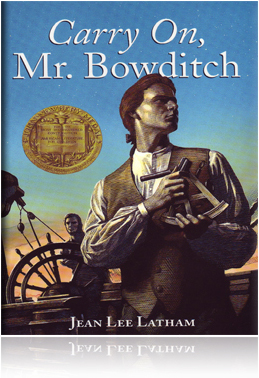
Carry on, Mr. Bowditch by Jean Lee Latham, 1956 Newbery Medal Winner


The House of Sixty Fathers by Miendert Dejong, 1957 Newbery Honor Title

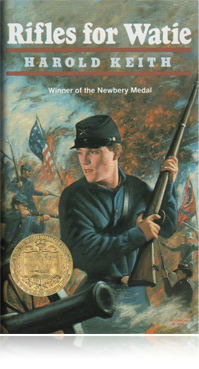
Rifles for Watie by Harold Keith, 1958 Newbery Medal Winner

The Family Under the Bridge by Natalie Savage Carlson, 1959 Newbery Honor Title

Island of the Blue Dolphins by Scott O'Dell, 1961 Newbery Medal Winner

The Bronze Bow by Elizabeth George Speare, 1962 Newbery Medal Winner


The Golden Goblet by Eloise Jarvis McGraw, 1962 Newbery Honor Title

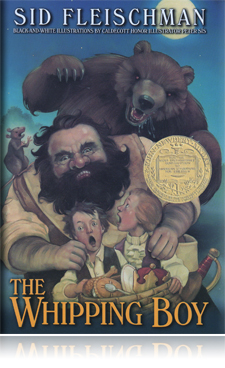
The Whipping Boy by Sid Fleischman, 1987 Newbery Medal Winner


Number the Stars by Lois Lowry, 1990 Newbery Medal Winner

Crispin, The Cross of Lead by Avi, 2003 Newbery Medal Winner

When considering Calvino's criteria for classics, what books come to your mind? What children's books? In this list of Newbery's there is a missing title that should absolutely be on it and that is To Kill a Mockingbird. What books do you think are missing? Do you disagree with the inclusion of any on this list? Later this week, I will provide a list of our favorite Caldecott Medal winners.