Wednesday, March 05, 2014

Reading for Emotional Health

I recently came across a wonderful article entitled "Deep Calls to Deep" written by Joseph Prever. In it he speaks about the power of story to speak to us during the difficult times in life, often in unexpected ways. Growing up in a literary family he was exposed to literature far beyond his comprehension and only later was able to appreciate the formative role it played in his life. And only later was he able to understand the emotions faced by the characters he encountered. It's a beautiful article and one that I'm sure you will find encouraging. Click here to read.

The section of the article I found exceptional and very moving was where he talks about being exposed to the gruesome images of The Rime of the Ancient Mariner. And he asks a question we're often asked at BFB and answers it much more eloquently than we have been able to!
Is it safe to expose children to such dark images? I think so, or as safe as any real poetry can be; poetry is no tame lion. At that age, I had no categories in my mind for real darkness, and so the darkness couldn’t get in to do me damage. But the image stayed; which meant that when the reality showed up years later, I was not defenseless.

What a beautiful way to put it. In the past decades we've increasingly sterilized the images we place before our children. While the original Grimm fairy tales were in fact very grim and often disturbing, we're no longer willing to tell stories of cannibalistic women living in candy houses and instead opt to present stories of princesses attaining self-fulfillment and tales where dreams come true and everyone lives happily ever after. This may be a good thing, especially when it comes to evil stepmothers wanting to be rid of their stepchildren, but when it comes to great literature one must ask, "Are we limiting the ability of our children to deal with the difficulties life will inevitably present them?"

When one considers the stories that speak most deeply to us they are not the tales of everything turning up roses. They are the stories that provide guidance to us in the decisions and situations we face in real life.

Whether one seeks relational wisdom from Jane Austen or encouragement from Psalms, great literature is not made up of cotton candy tales. When I was young I spent hours staring at the illustrations that accompanied a fantastic children's version of Bunyan's Pilgrim's Progress. These were pictures of frightening monsters, dark valleys, daunting mountains, and treacherous companions. I remember friends of my mom expressing their surprise that she allowed her children to be exposed to such a violent book. This despite the fact that Pilgrim's Progress is one of the great literary works of Christianity. Just as Prever later found solace from the poetry his mother read to him, I've found myself comforted by the story of Christian's perilous journey. Reading the original last year was enriched by the images I carried with me from that children's version read so long ago. And through the ups and downs of life I take comfort in the fact that just as Christian faced obstacles, he was also granted periods of rest and renewal. Even in the darkest points of life, I am reminded by Bunyan's poignant tale that this too shall pass and while I do not have the ability to see beyond the next moment, Christian's faithfulness in a multitude of challenges and situations reminds me that a single period does not define a life. It's now an overused cliché that life is a journey but it's also true and I know of no other piece of literature that illustrates that point more clearly. Pilgrim's Progress reminds me to cherish the sweet days, persevere through the difficult ones, and give thanks throughout. And that is the power of great literature.

We would love to hear what you think! Chime in below in the comments section and share your thoughts. Don't forget to check out our Facebook and Pinterest pages.  To learn more about Beautiful Feet Books, click here.
And if you've enjoyed this, please feel free to share using the buttons below! 

1st image source: http://simple.wikipedia.org/wiki/File:Hansel-and-gretel-rackham.jpg

2nd image source: http://www.wikipaintings.org/en/henri-martin/young-girl-reading

Friday, February 28, 2014

Fun Links for the Weekend


Here at BFB we love reading articles, books, and other blogs relating to history, education, and social studies. We would love to be able to write full blog entries on every interesting article we come across but that just isn't possible! So, we're going to provide a weekly roundup of interesting articles and post it each Friday. We hope you enjoy reading these links as much as we have! It's always good to have a reminder that history is the fascinating story of people just like us!


Historical menus - anyone feel like trying boar's head? 


Encouraging reminders for homeschooling moms.  

Letting kids run free may have some unexpected benefits!

Hugely popular historical twitter feed is run by two teenagers.

Can quitting actually be a beneficial skill?

treasure trove of photographs of Queen Victoria will go on display at the Getty Center.

Children should be allowed to lose.

Today in history.

A suggestion for one of our favorite read-alouds.

Have a fantastic weekend.


We would love to hear what you think! Chime in below in the comments section and share your thoughts. Don't forget to check out our Facebook and Pinterest pages.  To learn more about Beautiful Feet Books, click here.
And if you've enjoyed this, please feel free to share using the buttons below! 

Monday, February 24, 2014

BFB Fundamentals: Is BFB Classical?


This is Part IV in our BFB Fundamentals Series. 
Click on the links to read Part IPart II and Part III

By Rea C. Berg
Dear Friends,
In Part IV of our series BFB Fundamentals, we are exploring the question of whether or not Beautiful Feet Books is classical in nature. As we noted in the previous post, until the definition of classical is clarified, the question can become one of semantics and may lead to simplistic conclusions.  Because classical is currently the homeschool paradigm de jour, examining some of its well-accepted tenets should prove helpful as you determine which path is right for you and the students you serve.

What does contemporary classical homeschooling mean?

Classical education as a home schooling model first became popular as the 20th century gave way to the 21st and has remained so since. For those of us who began home schooling in the 1980s, classical education was the new kid on the block.  As with any fad, it swept many in its wake and provided some folks with solutions to the failing standards they saw in public education as well as in the more relaxed homeschooling model.  Its emphasis on a rigorous academic approach seemed to guarantee the creation of scholars who would take positions of leadership in law, medicine, government and so forth.  This would be achieved through implementing the trivium as we noted in our previous post.

Stage One: The Grammar Stage

Early Greek educators did not view education as the process of three distinct stages, but as soon as students could read and write they were reading the classic Greek texts.
Early Greek educators did not view education as the process of three distinct stages; as soon as students could read and write they were reading the classic Greek texts.
Modern classical proponents ascribe to the notion that learning takes place in three distinct 4-year phases of a student’s life. While these phases may seem to correlate to the physical and intellectual development of the child, the bland acceptance of them can prove problematic. In the grammar stage of the classical approach (also known as the poll-parrot stage), emphasis is placed on pouring into the student facts (indeed “masses of information”-as one promoter put it) as children are supposedly sponges ready and willing to soak up facts of every kind, and can easily memorize these facts. Theoretically, later on, in the logic stage, these facts will be drawn upon as the child begins to reason. While this approach fits some students well, especially those gifted in memorization, other students, particularly those not gifted with the ability to retain masses of disparate facts, flounder. The focus on pouring information into a young child is based on the notion that in the grammar stage children will unquestioningly accept what is offered.
But is this 4-year cycle based upon a truly classical approach to education?  Did the ancients view education through this 12-year paradigm to which modern classical proponents ascribe?  As Diane Lockman points out in her helpful article “Classical Education Made Easier“, the ancient Greeks did not separate the grammar, logic, and rhetoric stages. Students became proficient in reading, reasoning and speaking as they studied the classic texts of Greek literature with an emphasis on copy work and reading and reciting aloud.
An authentic classical Christian education, as developed during the ancient Greco-Roman world and later refined by the Western Europeans and American colonists, involved mastering three fundamental skills so that the student could then explore the deeper meaning of abstract ideas for the purpose of influencing society.  Three chronological stages were never part of the original interpretation.
The Charlotte Mason approach asserts that all children, regardless of age, are capable of reason, delight, appreciation of beauty, and  that “Education should aim at giving knowledge touched with emotion” (For the Children’s Sake). Pouring information into a child for the mere goal of “filling the brain with facts” defies the essential nature of classical education–the desire to teach children to think. True education cannot ignore the spirit of the child, his basic need to feel connected in some way to the studies at tumblr_moe00wJ7U91rrs6fio1_500hand.  At Beautiful Feet we believe this is done through literature’s emotional connection–the ability to identify with others through the power of stories of literary beauty and historical import.  A quick narrative read of historical facts (standard fare in most classical approaches) that offers no literary beauty and no connection to the great questions of the human condition, fails to meet the standards of a truly classical education.

Begin at the beginning: the four-year cycle of history study?

Additionally, the current classical notion that history studies must begin at the beginning (with ancient history in first grade) is another layer of artificial construction upon an already artificial 12-year model.  Classical education’s promotion of a four-year cycle of history instruction seems reasonable and the repetition (“what we don’t get the first time around, we’ll be sure to pick up next time!”) provides reassurance.  While the four-year cycle approach does provide that revisiting, it doesn’t consider the question of age and developmental appropriateness for subject matter. This concern is dismissed by promoting the notion that while studying ancient history with your first grader, one can just focus on mummification, gladiators, and chariot races; in effect this belies the basic notion that ancient history can be taught to a first grader.  The resultant “classical” studies are cultural in nature, not historical. Indeed, Oxford Reference defines history as “the study of past events, particularly in human affairs”–the study of history necessitates the focus on events.

History, taught classically  . . .

So how does one approach historical studies with a truly classical view to nurturing in young students reading, reasoning, and speaking skills? In essence, this can be accomplished in much the same way as the ancient Greeks did it–by exposing children to the best age-appropriate literature which is relevant to their times and culture.  For a young American child this means the best children’s books on the early saga of America’s great story, much as the Greeks read Homer and studied Plato–the stories of their ancestors, the history of their nation.  A child gifted with the knowledge and appreciation of his own historical heritage better understands his or her place in the world and from that foundation can embrace the beauty and the heritage of other nations and cultures.


So, how does this answer our question, “Is Beautiful Feet Books classical?”  If one looks at some contemporary notions of classical, then the answer would be, “No.”  On the other hand, if one perceives classical as incorporating Socratic reasoning and discussion, engaging with timeless literature (age appropriate), eschewing the use of textbooks and bland narrative works, and involving students in the Great Conversation about the important issues of the human heart, then yes, Beautiful Feet Books is classical.

We would love to hear what you think! Chime in below in the comments section and share your thoughts. Don't forget to check out our Facebook and Pinterest pages.  To learn more about Beautiful Feet Books, click here.
And if you've enjoyed this, please feel free to share using the buttons below! 

Wednesday, February 12, 2014

BFB Fundamentals: What is Classical anyway and who was Charlotte Mason?


This is Part III in our BFB Fundamentals Series. 
Click on the links to read Part I and Part II

“Most of all, perhaps, we need intimate knowledge of the past.  Not that the past has any magic about it, but because we cannot study the future, and yet need something set against the present, to remind us that the basic assumptions have been quite different in different periods and that much which seems certain to the uneducated is merely temporary fashion.  A man who has lived in many places is not likely to be deceived by the local errors of his native village; the scholar has lived in many times and is therefore in some degree immune from the great cataract of nonsense that pours from the press and the microphone of his own age.” –C. S. Lewis, The Weight of Glory

What is Classical?


The term "classical" is one that has been bandied about the homeschooling movement for years and we are often asked if our curriculum is "classical". Answering this seemingly simple question has proven difficult as we find that there are as many definitions of the term "classical education" as there are curricula. People can purchase curriculum to teach "classical handwriting" and "classical science." This poses a challenge as it seems that everyone has their own conception of what it means to adopt a "classical" education approach.

The Modern Classical Movement


Classical education, in its modern use of the term, refers simply to an educational approach built around the trivium, or three-part process that aims to train the mind. The three parts refer to three stages: the grammar stage, the logic stage, and the rhetoric stage. Each of the three stages corresponds to four years, so during grades 1-4 the student is in the grammar stage and studying the basics, laying a foundation for the next stage. This approach to the four year cycle is relatively new, a product of educational bureaucracy at the turn of the 20th century when it was determined that public schools would be required to provide twelve years of education. While the idea of "classical" education has existed from the early Medieval period, its proponents argue that it is rooted in ancient philosophy, employing the methods used by Socrates and Plato. The modern classical movement also takes much from the "Great Books" movement, advocating that students and parents take part in the "Great Conversation" that has existed between the premier thinkers of all time. This is accomplished through exposure to the best literary works of the West.

Teaching History "Classically"


As we at BFB are primarily concerned with teaching history, let's take a look at how the trivium impacts the teaching of history. First, a classical approach advocates that all of world history be taught in four years. So from grades 1-4, a student is presented with a chronological world history. This four year pattern is repeated three times before the student graduates from high school. Obviously, this means that the history of the ancient world including Egypt, Greece, Rome, Mesopotamia, China, and more is presented in 1st grade. The Medieval period is generally taught in grade 2, the age of exploration and discovery in grade 3, and modern/contemporary history in grade 4. The cycle then begins at the beginning with the ancient world being taught again in grade 5, and so on and so forth. During the grammar stage memorization is emphasized. This is where classical education advocates argue that a student is most readily able to absorb facts. During these years students are often taught chants in which they memorize historically relevant trivia such as the names of the US presidents or the dates of key events. It is not until the later years that students are exposed to the great literary works of Western culture.

Charlotte Mason and Classical Education


Now that the trivium and "classical" education has been very basically defined, let's take a look at another educational approach that has been hugely influential in our own educational journey. Charlotte Mason, a British educator who lived during the late 1800s believed education was an atmosphere, a discipline, and a life. Boiling Mason's pedagogy to its very basic elements reveals an educational approach designed to create a pleasant environment that would encourage the development of life-long learners, and cultivate curiosity and discovery. This required wide exposure to literature, conversation, exploration, and the arts. 

Charlotte Mason fervently advocated the use of "living books" to teach history, eschewing the dry textbooks that were being promoted at the time. These living books relayed information in a story form, allowing children to begin seeing history in terms of a human story and not simply a collection of facts. 

Hopefully we have helped clear up some of the confusion surrounding the terms "classical" and "Charlotte Mason". In our next entry we will answer the question we are most often asked, "Is BFB classical?"

We would love to hear what you think! Chime in below in the comments section and share your thoughts. Don't forget to check out our Facebook and Pinterest pages.  To learn more about Beautiful Feet Books, click here.
And if you've enjoyed this, please feel free to share using the buttons below! 

Wednesday, January 29, 2014

BFB Fundamentals: Why Teach History Through Literature?


 Hello! Today we bring you Part II in our series BFB Fundamentals. Rea is answering the question, "Why teach history through literature." For Part I, Why Teach History, click here
History is the essence of innumerable biographies. –Thomas Carlyle

Why Teach History through Literature? by Rea Berg

In our first installment of this series, we looked at the importance of the study of history. When we consider the question of how history ought to be taught and why we would consider teaching  history through literature, there are some interesting points to bear in mind: 1.  How has history been taught through the ages?  2. Why use literature to teach history?  3. Why is the use of literature the most effective way to learn history?

How has history been taught through the ages?

Waves of immigrants posed challenges to 19th century educators
In the nineteenth century, with the dawn of compulsory education in America, schools were forced to begin to standardize what should be taught to all these children sitting eight hours a day at their obligatory desks. Because the dawn of compulsory education coincided with industrialization and with a massive influx of immigrants, educators felt motivated, from a sometimes elitist mindset, to educate the masses for the purposes of creating a literate work force.  Presented with the challenge of getting all these children from varying backgrounds on the same educational “page”, it is easy to see how the textbook naturally evolved.  Certain events, personages, significant battles and historical milestones were deemed essential knowledge for the creation of good citizens and a stable workforce.  These “facts” were compiled into disseminated formats stripped of the narrative elements of story, resulting in dry works of little human interest and no literary value.
Standardizing the teaching of history spelled the death knell for creating any love of history in that rising generation of new Americans. It alparisso flew in the face of how history was taught for centuries.  From ancient times forward students studied history by reading history.  In other words, if a student say, in the Middle Ages, was studying history he read the works of Herodotus, Thucydides, Eusebius, Plutarch and Josephus. Of course, if you were a young French boy studying in a monastic school in Paris, reading these works meant learning Greek, Latin, and in some cases Hebrew, for ancient histories were not translated into vernacular languages until the late 1200s.  In some instances, it would be centuries before these ancient classic texts appeared in English.  An English schoolboy in London, would not have had Plutarch’s Parallel Lives in English until the late 1500s.   This is one reason why a classical education was always inextricably linked with the study of Latin and Greek.

Why use literature to teach history?

Our ancient young predecessors, sitting by candlelight or lamplight, reading history, actually read history through literature.  There simply was no other way to study history–which brings us to our second point. History has effectively been taught through literature since ancient times.  Only just the last century or so has this vibrant subject been robbed of its human connection by the ubiquitous textbook.  As Neil Postman urges in his book, The End of Education, those who desire to improve teaching ought to get rid of all textbooks which, in his opinion are “the enemies of education, instruments for promoting dogmatism and trivial learning” (116).  Exchanging literature–biographies, classical works, even historical fiction, for the history textbook not only restores this discipline to its historic roots, but also reinvigorates it with its inherent passion, human interest, and wonder.  A middle-grade child reading Johnny Tremain for her studies of the American Revolution will learn far more about the essence of that struggle than even the most colorful textbook could ever impart.

Why is the use of literature the most effective way to teach history?

Literature, as defined by the Oxford reference is “written works, especially those considered of superior or lasting artistic merit.”  Now, I’m not sure about you, but I have yet to hear of a single history textbook to win a Pulitzer or a Nobel prize for Literature.  Written works achieve the status of literary merit by their ability to speak to the human condition and the experiences, trials, and aspirations of the human heart. In this way, the best works draw the reader into the drama of the story and through the emotions open the mind.  David McCullough, Pulitzer prize-winner for his work John Adams, affirms that the most effective way to teach history is to “tell stories.”9780684813639_p0_v2_s260x420
That’s what history is: a story.  And what’s a story? E. M. Forster gave a wonderful definition to it: If I say to you the king died and then the queen died, that’s a sequence of events.  If I say the king died and the queen died of grief, that’s a story.  That’s human. That calls for empathy on the part of the teller of the story and . . . the listener to the story. (“Knowing History”)
The notion of emotion and empathy as a critical component of history’s ability to speak to the human heart, was promoted by Charlotte Mason, the 19th century educational reformer. She advocated the use of “living books”–literature, history, biography—”to open limitless avenues of discovery in a child’s mind”.  She taught that all, “Education should aim at giving knowledge touched with emotion” (For the Children’s Sake). It is the connection between the human heart, mind, and will, that makes the study of history so enjoyable and memorable to those fortunate to study it through the best books. As a wonderful by-product, students brought up on an educational curriculum rich in the best literature often become compassionate, engaged, and thoughtful adults–the best possible educational outcome.

Works Cited:
“Knowing History and Who We Are.”  David McCullough.  Imprimis.  Hillsdale, MI: Hillsdale College. April 2005.
Susan Schaeffer Macaulay, For the Children’s Sake: Foundations of Education for Home and School, Wheaton, IL: Crossway Books, 1984.

We would love to hear what you think! Chime in below in the comments section and share your thoughts. Don't forget to check out our Facebook and Pinterest pages.  To learn more about Beautiful Feet Books, click here.
And if you've enjoyed this, please feel free to share using the buttons below! 

Monday, January 20, 2014

BFB Fundamentals: Why Teach History?


Hello! We are excited to introduce a new series on our blog called BFB Fundamentals. We will be answering questions like "Why teach history?" and "Is BFB classical?" and "What's the point of using literature to teach history when textbooks make it so easy?" We hope you find it useful and would love to hear from you so feel free to email us with questions (rebecca@bfbooks.com) and comments. Feel free to share your experiences in the comments section. Let's get a conversation going! Without further ado, here we go!

Why Teach History?


For many who grew up and were educated in a traditional schoolroom setting the study of history may seem a bit pointless. How often have you been asked the date of the fall of Rome? Sure it was interesting to learn about the Pilgrims and the first Thanksgiving, but has that knowledge ever served you? And now you've decided to homeschool your children or are involved in teaching and history is a required subject. Or maybe your child is asking you, "Why do I need to know any of this anyway?" 

The fact that this question is now a common one points to an increasingly utilitarian view of education. In many ways the answer to the question of why to teach history comes down to one's educational philosophy. Is the purpose of education simply preparation for entering the workforce or is it something more? If you believe, as we do, that education goes beyond employee training, then like us, you probably believe in the importance of rich historical study. If you have a philosophy of education that includes training in critical thinking skills, reason, citizenship, and the formation of character, you probably have a great respect for the study of history. Unfortunately that educational philosophy, while ascribed to by many, is rarely held in conviction by educators and certainly not reflected in government mandates. Current statistics on student's knowledge of the basic facts of US history reveal a disturbing ignorance which belies any devotion to the study of history. Education is viewed as valuable in so far as it prepares young people to be good employees. And yes, education should prepare young people for adult lives, of which work is an important and valuable part, but it has a much deeper value in training young people to be compassionate, thoughtful, and engaged members of their communities. 


How did we get here? 


Over the past century the study of history has been increasingly isolated from the other disciplines. Beginning in the 19th century textbooks became the primary mode of teaching history. The drive towards standardization within classrooms drove the development of the textbook and it proved useful for subjects like math and science. Unfortunately for teaching a subject as vibrant as history, the adoption of textbooks stripped the subject of all its life. Where history was once the study of our human story and was filled with tales of adventure, heroic quests, stupefying failures, humorous dunces, and wicked villains, it became a collection of names and dates to be chanted over and over until they were firmly fixed in young minds. One can picture the one-room school houses with their strict schoolmarm, pointer in hand, drilling facts into the heads of students as they chant away the names of the presidents, dates of various battles, etc. Now, this approach, still employed by some educational approaches, is a great way to instill a knowledge of facts, but it's not so great for teaching students to engage with history, to form informed opinions, to discuss ideas. 

History as more than facts


From the beginning of time, we human beings have been storytellers. Long before people thought up the idea of "history" we were telling one another stories from the past, connecting our short lives with a long chain of others who came before us. Whether it was relating creation narratives or listing genealogies, whether it took place around a tribal circle or in the marble forums of ancient Greece, these stories were our first "histories". Often thought of as myths now, they provided ancient peoples with a context for the human story. Part of the human condition is the ability to question our place in this world and history provides part of the answer. In relating the human story and connecting ourselves with the vast pageant of people who came before us, we get to know ourselves a little better. We can see our lives within the context of something greater than ourselves. And history provides invaluable lessons in how to conduct ourselves. We can learn from the fascinating successes and failures of people who are not so different from us, but who lived in the centuries before us. This is the greater purpose of history–and it is lost when distilled down to basic names, dates, and "facts". 

But what about getting a job?


Now you may be thinking this is all great, but who is going to hire someone who isn't adequately prepared for a job? In our current economic climate the in vogue career paths are all about technology and medicine. Both of these career paths require specialized training and many education wonks are
advocating that we start teaching computer coding and advanced math in elementary school. This could be very short sighted. It is no longer a world where one can choose a career path and expect to work within that chosen field for the entirety of one's career. The average young person will change jobs/careers fifteen times in his or her lifetime. That's probably 12 times more than his parents and could be 14 times more than his grandparents. In a job market that is so fluid, the skills required are not necessarily highly specialized. Yes, it's a good idea to know how to write computer code, but it's more valuable to be able to think critically, to be creative and innovative, to understand human nature, make rational arguments, be an engaged reader, a thoughtful writer, and a thorough researcher. The study of history taught holistically provides these skills. And so you may find yourself asking, how do I teach history "properly"? That question will be answered in our next entry in this series. In the mean time, leave a comment below telling us about your experiences in learning and teaching history. 


We would love to hear what you think! Chime in below in the comments section and share your thoughts. Don't forget to check out our Facebook and Pinterest pages.  To learn more about Beautiful Feet Books, click here.
And if you've enjoyed this, please feel free to share using the buttons below! 

Monday, December 02, 2013

Readings for Advent


Advent means coming and is the season of time marked by the four Sundays leading up to Christmas. Traditionally celebrated with an Advent wreath, candles, and appropriate readings, it is a time that one sets aside each day to anticipate the coming of the Christ child. I love this tradition because it makes me pause in the middle of all the hustle and bustle and remember the true gift of Christmas. It also takes me back to those feelings I had as a child, the longing for Christmas morning, the anticipation of the arrival of the baby Jesus and it reminds me of the longing of the world for our Savior.


One more aspect of Advent that I love is that when we celebrate this wonderful tradition, we are joining with millions of other believers, actually acting out the command to be united in our faith. Catholic and Protestant, Orthodox and Pentecostal, people in home churches and those worshipping in cathedrals, believers of every nation, tribe, and language are joined in their remembrance of what an incredible miracle we celebrate each Christmas. 

Celebrating Advent with your family is a wonderful tradition as many of you can attest to. If you have not participated in marking this season with your family, I would encourage you to consider it this year. It truly transforms the season from one so easily marked by excess consumption and consumerism to one that is more thoughtful, more meaningful, and truly celebratory.

Online resources:
  • Dr. Jono Linebaugh is posting weekly advent devotionals and videos on the Knox Seminary website. They're very good and highly recommended. Click here
  • Ann Voskamp provides beautiful advent readings, Jesse tree ornaments, and her book, The Greatest Gift, makes a wonderful family read-aloud with daily readings for the month of December.
Books:

We Light the Candles: Devotions Related to Family Use for the Advent Wreath
This is a great resource for families who want to incorporate an Advent wreath into their family devotions. The readings are set up for each day making the celebration of Advent very easy. 

The Advent Jesse Tree: Devotions for Children and Adults to prepare for the coming of the Christ Child and Christmas
The Jesse Tree is another form of Advent calendar and involves daily readings and the creation of an ornament to place on a tree. Each ornament is symbolic and relates to a specific reading from the Bible. This is a wonderful way for the entire family to participate in Advent and provides readings from the Old Testament attesting to the expectation of the Savior! 

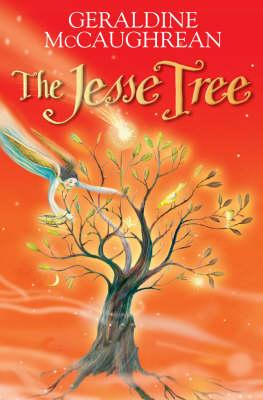
The Jesse Tree by Geraldine McCaughrean
This title would be great to use along with the one above as it is beautifully illustrated and would help younger children understand the activities taken from The Advent Jesse Tree. McCaughrean's text tells the story of a little boy who enters a church while a carpenter is working on constructing the Jesse Tree.  In lovely prose that would appeal to children of all ages, the stories of the Old Testament are outlined and the meaning of Christmas is related. 


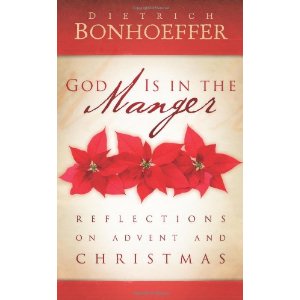
God is in the Manger: Reflections on Advent and Christmas by Dietrich Bonhoeffer
Bonhoeffer's Christmas meditations have quickly established their place in the Christian tradition for good reason. His understanding of the joy and gravity of the incarnation causes readers to see how truly marvellous Jesus is. This is an excellent resource for families with older children and for adults who want to add Advent readings to their personal devotion time. 

Advent and Christmas, Wisdom from Henri J. M. Nouwen
I love the writings of Henri Nouwen. His understanding of grace transformed my view of God and this little collection of readings is a wonderful way to be introduced to this humble priest. Each day presents a reading as well as a tip for application, making this a book you can put into action. 

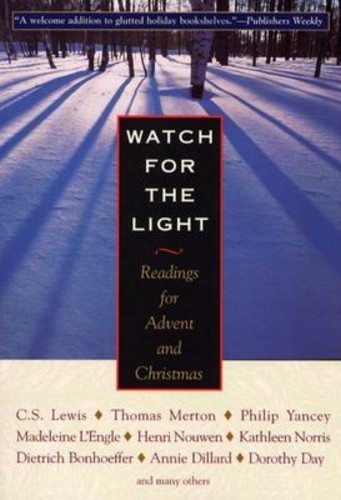
Watch for the Light, Readings for Advent and Christmas
This is a great collection of meditations from writers like Thomas Perton, Madeleine L'Engle, Dorothy Day, C.S. Lewis, Bonhoeffer, Philip Yancey, and many more. For those of you who want to add something to the traditional Bible readings of Advent, this would be a great addition and provides enough readings to take you right in to the new year. 

If you are interested in purchasing any of these books from Beautiful Feet, just give us a call at 800.889.1978 and we'll be happy to help you.

There are about a million other resources available online and many other great Advent books, but I hope this gives you a start. Please share your favorite resources by leaving a comment below so all our readers can benefit. And we wish you all a wonderful Christmas and holiday season.