Friday, July 13, 2012

Caldecott Medal Classics

As we discussed in our previous entry What is a Classic? there are many wonderful Newbery Medal winners. Now to the Caldecotts. The Caldecott has been awarded each year since 1938 and is given by the Association for Library Service to Children, a division of the American Library Association, to the artist of the most distinguished American picture book for children. This award is distinct from the Newbery in that it is awarded for aesthetic achievement only. That being said, there are some absolutely wonderful books in the list of winners. And it's so important for children to be exposed to quality illustration. It helps develop a sense of beauty, it fuels the imagination, and encourages students to express themselves in drawing, painting, and other mediums. Here are a few of our favorite Caldecott Medal winners.


 Abraham Lincoln by Ingri & Edgar Parin d'Aulaire, 1940 Caldecott Medal Winner


They Were Good and They Were Strong by Robert Lawson, 1941 Caldecott Medal Winner


Paddle-To-The-Sea by Holling C. Holling, 1942 Caldecott Honor Title


Make Way for Ducklings by Robert McCloskey, 1942 Caldecott Medal Winner


Yonie Wondernose by Marguerite de Angeli, 1945 Caldecott Honor Title


Blueberries for Sal by Robert McCloskey, 1949 Caldecott Honor Title


Song of the Swallows by Leo Politi, 1950 Caldecott Medal Winner 


America's Ethan Allen by Stewart Holbrook and illustrated by Lynd Ward, 1950 Caldecott Honor Title


One Morning in Maine by Robert McCloskey, 1953 Caldecott Honor Title


The Steadfast Tin Soldier by Hans Christian Andersen, illustrated by Marcia Brown, 1954 Caldecott Honor Title


The Thanksgiving Story by Alice Dalgliesh, illustrated by Helen Sewell, 1955 Caldecott Honor Title


Chanticleer and the Fox illustrated by Barbara Cooney, 1959 Caldecott Medal Winner


Thy Friend, Obadiah by Brinton Turkle, 1970 Caldecott Honor Title


Noah's Ark by Peter Spier, 1970 Caldecott Medal Winner


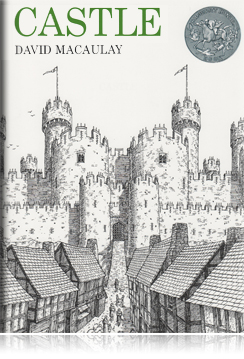
Castle by David Macaulay (Houghton), 1978 Caldecott Honor Title


Owl Moon by Jane Yolen, illustrated by John Schoenherr, 1988 Caldecott Medal Winner


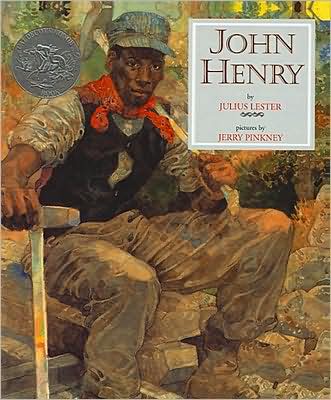
John Henry by Julius Lester, illustrated by Jerry Pinkney, 1995 Caldecott Honor Title

The Man Who Walked Between the Towers by Mordicai Gerstein, 2004 Caldecott Medal Winner

The Invention of Hugo Cabret by Brian Selznick, 2008 Caldecott Medal Winner
As you can see there are some absolutely gorgeous titles in this list. Books like this are all wonderful additions to your library as you will find your children returning again and again to look at the pictures, notice new details, and relish the beauty found on these pages. I would love to hear what books you remember from your childhood due to the illustrations. One of my personal favorites is Wilfrid Gordon McDonald Partridge, I love Julie Vivas's joyful watercolors. 
So chime in! Share your favorites. And we will be back with more award winning titles in the future. 

Wednesday, July 11, 2012

What is a classic?

While many people are able to name their favorite books or reference a generally accepted list of "classics" when asked, it is worth considering what makes a book worthy of the description. Of course, there are those classics that endure the test of time, the Bible, The Iliad, Pride and Prejudice. And there are those books that are marketed as "modern classics" like The Five People You Meet in Heaven. I'm not sure what makes a "modern classic" as I do believe that the test of time is a worthy one, but what about the books that are our personal classics? In choosing these books, I think that Italian writer, Italo Calvino presents key criteria in his book Why Read the Classics. He has 14 points by which he thinks the classics should be evaluated. Many of these are subjective and would allow a reader to choose his or her "own" classics based on these points. You can read all 14 points here but I would like to share my favorites:
  • The classics are those books about which you usually hear people saying: 'I'm rereading...', never 'I'm reading...'
  • The classics are those books which constitute a treasured experience for those who have read and loved them; but they remain just as rich an experience for those who reserve the chance to read them for when they are in the best condition to enjoy them.
  • The classics are books which exercise a particular influence, both when they imprint themselves on our imagination as unforgettable, and when they hide in the layers of memory disguised as the individual's or the collective unconscious.
  • A classic is a book which with each rereading offers as much of a sense of discovery as the first reading. 
  • A classic is a book which even when we read it for the first time gives the sense of rereading something we have read before.
  • A classic is a book which has never exhausted all it has to say to its readers.
  • Classics are books which, the more we think we know them through hearsay, the more original, unexpected, and innovative we find them when we actually read them.
  • 'Your' classic is a book to which you cannot remain indifferent, and which helps you define yourself in relation or even in opposition to it.
  • A classic is a work that comes before other classics; but those who have read other classics first immediately recognize its place in the genealogy of classic works.
  • A classic is a work which relegates the noise of the present to the background hum, which at the same time the classics cannot exist without.
I am interested in what you think of these criteria in relationship to children's books. For my family and our many hours of reading together, I think there were a few "classics" that really stand out in my memory; books that showed us what "classic" meant when applied to stories. We all loved The Little House in the Big Woods and Ralph Moody's Little Britches is a definite classic.

For those of you who want to build a library of children's classics, it is worth looking for Newbery and Caldecott award winners. Since 1921 the Newbery has been awarded each year to recognize "the most distinguished American children's book published in the previous year." It is generally a very reliable indicator of quality content–especially for those books published between 1945-1970. Here are a few of our favorites:

The Trumpeter of Krakow by Eric P. Kelly, 1929 Newbery Medal Winner

The Forgotten Daughter by Caroline Dale Snedecker, 1934 Newbery Honor Title

Call it Courage by Armstrong Sperry, 1941 Newbery Medal Winner

Blue Willow by Doris Gates, 1941 Newbery Honor Title

The Matchlock Gun by Walter D. Edmonds, 1942 Newbery Medal Winner


George Washington's World by Genevieve Foster, 1942 Newbery Honor Title

Adam of the Road by Elizabeth Janet Gray, 1943 Newbery Medal Winner

Johnny Tremain by Esther Forbes, 1944 Newbery Medal Winner

The Hundred Dresses by Eleanor Estes, 1945 Newbery Honor Title


Abraham Lincoln's World by Genevieve Foster, 1945 Newbery Honor Title

Justin Morgan Had A Horse by Marguerite Henry, 1946 Newbery Honor Title

Misty of Chincoteague by Marguerite Henry, 1948 Newbery Honor Title

King of the Wind by Marguerite Henry, 1949 Newbery Medal Winner

Seabird by Holling Clancy Holling, 1949 Newbery Honor Title

The Door in the Wall by Marguerite de Angeli, 1950 Newbery Medal Winner

Amos Fortune, Free Man by Elizabeth Yates, 1951 Newbery Medal Winner

Minn of the Mississippi by Holling Clancy Holling, 1952 Newbery Honor Title

The Courage of Sarah Noble by Alice Dalgliesh, 1955 Newbery Honor Title

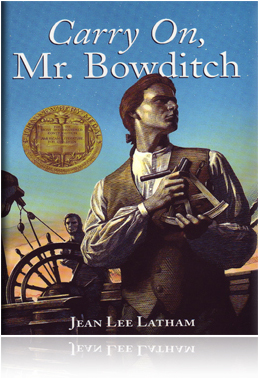
Carry on, Mr. Bowditch by Jean Lee Latham, 1956 Newbery Medal Winner


The House of Sixty Fathers by Miendert Dejong, 1957 Newbery Honor Title

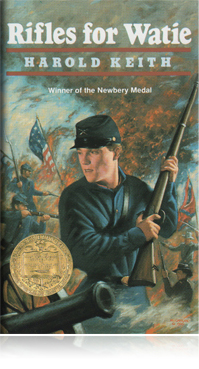
Rifles for Watie by Harold Keith, 1958 Newbery Medal Winner

The Family Under the Bridge by Natalie Savage Carlson, 1959 Newbery Honor Title

Island of the Blue Dolphins by Scott O'Dell, 1961 Newbery Medal Winner

The Bronze Bow by Elizabeth George Speare, 1962 Newbery Medal Winner


The Golden Goblet by Eloise Jarvis McGraw, 1962 Newbery Honor Title

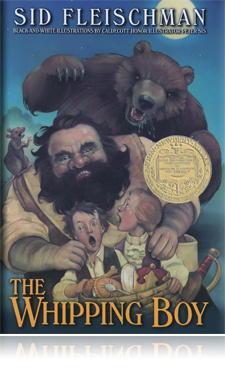
The Whipping Boy by Sid Fleischman, 1987 Newbery Medal Winner


Number the Stars by Lois Lowry, 1990 Newbery Medal Winner

Crispin, The Cross of Lead by Avi, 2003 Newbery Medal Winner

When considering Calvino's criteria for classics, what books come to your mind? What children's books? In this list of Newbery's there is a missing title that should absolutely be on it and that is To Kill a Mockingbird. What books do you think are missing? Do you disagree with the inclusion of any on this list? Later this week, I will provide a list of our favorite Caldecott Medal winners. 

Monday, July 09, 2012

Celebrity in light of historical context


I thoroughly enjoyed reading the following article by Alina Tugend in The Times on our culture's obsession with success. It is definitely worth reading and can be found here. Tugend's editorial entitled Redefining Success and Celebrating the Ordinary is spot-on when it comes to the value our culture places on celebrity and success. The need to be #1 or the best, the brightest, the prettiest, the thinnest, the most wealthy, the craftiest, the most creative, is one that pervades our culture and can invade our own minds in insidious ways. Children are now saying that they want to be "movie stars" or "pop stars" a lot more than firemen or vets. The value of an ordinary life has been minimized and it's difficult to communicate to our children that normal is OK.

I was discussing this with some friends and we were talking about the fact that in any given generation there will only be a few people who will go down in the history books and be talked about by generations to come. The rest of us need to be happy with having our little place in the world and working faithfully in the places we have been sent. More than likely none of us will write an earth-shattering treatise or make some great discovery yet in today's climate of success, it's almost sacrilege to admit to choosing a life of "normality". Everywhere you look you can see people chasing that elusive "greatness" or "celebrity" at a high cost to themselves and their families. But, history and literature help shield us from that delusion. And they can help our children to see that value in life comes not from the limelight but from integrity, generosity, character, and hard work. 

When a child is raised on the stories of George Washington, Galileo, the Pilgrims, and other historical figures, they can learn about what makes a person worthy of historical memory. And they can learn from the examples and mistakes of those who have come before them. History is valuable not just for its example of great minds and characters but also for its terrible mistakes and injustices. It will also become apparent to a student of history that the people who are in the headlines today will probably be forgotten relatively quickly. Only a very remarkable few will be remembered centuries from now. 

Additionally fictional literature is also valuable for developing a child's sense of identity and value. If they are fed a steady diet of admirable characters in books like The Bronze Bow or The Family Under the Bridge they will be much more likely to see the worth of humility and faithfulness. While encouraging a child to do his or her best is fine, it is important to also emphasize the fact that their value is not in their performance but in their character. Providing them with stories that back this up will infiltrate their little hearts and buffer them from the allure and trap of being "the best" and show them the joys of living a good and kind life. 

To learn more about teaching history using literature, visit our website

Tuesday, July 03, 2012

Happy 4th of July!


Tomorrow is Independence Day and I am so excited to be celebrating it in the United States! My husband and I have spent the past five of seven July 4ths abroad and it's good to be home for this one! I think it is apt to remember John Adam's famous words regarding this special day:

The fourth day of July "will be the most memorable Epocha, in the History of America. I am apt to believe that it will be celebrated, by succeeding Generations, as the great anniversary Festival. It ought to be commemorated, as the Day of Deliverance by solemn Acts of Devotion to God Almighty. It ought to be solemnized with Pomp and Parade, with Shews, Games, Sports, Guns, Bells, Bonfires and Illuminations from one End of this Continent to the other from this Time forward forever more. you will think me transported with Enthusiasm but I am not. I am well aware of the Toil and Blood and Treasure, that it will cost Us to maintain this Declaration, and support and defend these States. Yet through all the Gloom I can see the Rays of ravishing Light and Glory. I can see that the End is more than worth all the Means. And that Posterity will tryumph in that Days Transaction, even although We should rue it, which I trust in God We shall not." (The Book of Abigail and John: Selected Letters of the Adams Family, 1762-1784)

John Adam's words, as is so often the case, continue to be so relevant today. As our country struggles financially, spiritually, and politically it is worth looking back and trying to learn lessons from those who came before us and faced similar challenges. Adams wrote this on the eve of going to war with England, one of the mightiest countries on earth at the time. He knew that this declaration would have to be defended at great cost, human and otherwise. While we are facing numerous challenges as a nation today, it is good to place them within a historical narrative to help see them in their proper context. Yes, times are difficult, but we live in an extremely blessed nation and are part of a global community that has never been so wealthy, so prosperous, or so free. So often this is lost in the 24 hour news cycle and it is important to remember. I think that this is why the study of history is so essential today. It provides background and helps us understand our small place in the world. It provides contrast as well as direction. So, on this 4th of July, I think it would be a great time to stop, look back to our founding, and give thanks. Just as Adams saw the the 4th should first be marked by "solemn Acts of Devotion to God Almighty" so should we take time to recognize his goodness. I have a feeling that if our political discourse and policy could be directed more by gratitude than by fear we would go a long way in solving the problems that seems so outsized and insurmountable. 

A very happy Independence Day from all of us at BFB! We hope you can spend time watching and participating in "Pomp and Parade" with family and friends. And if you're looking for some books about the founding of our country, we have many wonderful selections on our website. Check them out here!


Monday, July 02, 2012

Busy-ing ourselves to death...

American traffic jams always seem to represent the frantic and chaotic pace of modern day life. 

I am currently in the middle of an international relocation and while this may seem to have nothing to do with education or homeschooling, stick with me. For anyone who has been through this you know what a strange experience this can be. It's the third time in five years I've changed countries but this time the change is back to the United States, the country my husband and I said goodbye to five years ago. Looking back and thinking about the past years abroad I have been determined to preserve some of the live rhythms we've developed while living in Europe. One of the things I loved most was the slower pace of life. We haven't owned a car in all this time abroad and that one small change forces an entirely different lifestyle. Nothing goes fast when you are walking everywhere. Additionally, living abroad forced me out of the chaotic busy-ness that haunts so much of life today. It was a jarring change, one that I fought. I did not gracefully slip into a slower more meditative life with ease. No way. I hated it. I hated that I didn't feel like I had a purpose. I hated that I could not look back on each day and have a list of accomplished tasks neatly checked off on a to-do list. And I hated having to tell the people I met that at 28 years old I had no job or was working in a coffee shop wiping down tables and foaming milk. Moving abroad meant that all the things that kept me busy and gave me my identity were stripped away and it was a painful process. But, as we've discussed in the entry on boredom, it gave me a space in which to get to know myself much better–the good and the bad. And it was also a space in which I rediscovered creative aspects to my personality. I also came to rediscover the joy of time spent with friends in meaningful discussions–not just franticly sipped coffees in which we batted back and forth examples of exactly how busy we each were. There were a million sweet moments that could be savored when I wasn't rushing from one activity, duty, or obligation to the next. 

Now that I am four days back in the US life has sped up. My husband and I are driving in traffic in our rented car. We're grabbing meals on the go. We're meeting with realtors and employers. And we're frazzled. So, it was perfect to read The Busy Trap in the NYT and be reminded that while life is sometimes chaotic, it is so important to carve out that down time and open up space in our lives. The article's author Tim Kreider really takes on our modern obsession with being, or at least seeming, busy: "Busyness serves as a kind of existential reassurance, a hedge against emptiness; obviously your life cannot possibly be silly or trivial or meaningless if you are so busy, completely booked, in demand every hour of the day." Isn't it so easy to fall into this obsession with projecting importance through busy-ness? 


Kreider goes on to remind his readers that empty space is the birthplace of creativity. We have talked a lot about allowing the children in our homes and classrooms time to be bored, bu't what about us? For the homeschooling parents and teachers reading this, I think it is just as important that you schedule time for yourselves to have that space where you can let your mind wander and where you can be reenergized. You need creative inspiration just as much as your children! "Idleness is not just a vacation, an indulgence or a vice; it is as indispensable to the brain as vitamin D is to the body, and deprived of it we suffer a mental affliction as disfiguring as rickets. The space and quiet that idleness provides is a necessary condition for standing back from life and seeing it whole, for making unexpected connections and waiting for the wild summer lightning strikes of inspiration — it is, paradoxically, necessary to getting any work done."

In the midst of this move I have also begun reading For the Family's Sake by Susan Schaeffer Macaulay. Macaulay makes the observation that "home" is essential for everyone and it isn't necessarily a place but an "atmosphere." I could not agree more. In the performance and production emphasized world we live in, it is so essential that our homes become refuges from these pressures. As Macaulay states: "Charlotte Mason valued home as the primary setting for a child's life and relationships. Just as she said that "education is an atmosphere, a discipline, and a life," so we can say that the home is an atmosphere, a discipline, and a life." 


How can we protect our homes from the onslaught of chaos that afflicts our contemporary lives? How do we give ourselves and our spouses and children the gift of idle time? Is it even possible? Is Kreider being fair when he says: "It’s almost always people whose lamented busyness is purely self-imposed: work and obligations they’ve taken on voluntarily, classes and activities they’ve “encouraged” their kids to participate in. They’re busy because of their own ambition or drive or anxiety, because they’re addicted to busyness and dread what they might have to face in its absence." That is a convicting indictment–one that strikes me close to home. And so I am thinking of ways in which to create a peaceful atmosphere in my family's new home. One that will be so much more important as we re-enter the frenetic pace of American culture. How that will look is yet to be determined, but I would love to hear from you as to how you preserve sanity in your home. Is internet time limited? Do you read together? Do you say "no" regularly in order to protect you time? As Macaulay states, creating that atmosphere of a home is a discipline, something that requires conscious effort and practice. While I attempt to create that in my own home and life, I would love to hear about what you do. What has been successful? Any failed attempts? 

I would highly recommend reading the article, it's very well done and a great reminder that while it may not always seem like it, our lives are often busy because we choose to allow them to be. In the words of Kreider, "Life's too short to be busy."


Don't forget to check out our Facebook and Pinterest pages. 
And if you've enjoyed this, please feel free to share using the buttons below!