Showing posts with label Medieval Literature. Show all posts

Wednesday, April 13, 2016

Medieval History through Literature: Joan of Arc to the Philosopher's Stone

Audria is back with an update on her family's journey through the Middle Ages using our Medieval History Through Literature! I always love reading her updates–she find such creative ways of implementing activities and her family loves reading together so they all get in on the action. Read all about it:

After our delightful study of the Canterbury Tales with Beautiful Feet Books we started studying Joan of Arc and The One Hundred Years’ War between France and England. The story of St. Joan is so very sad. My children were not familiar with her at all and so had no idea of the amazing and heartbreaking story they were about to embark. As we read her story the kids bombarded me with questions…hard questions too! I had to explain the veneration of relics, asking saints for prayers, and the nature of visions. As we continued to read her story the kids struggled to understand why she was abandoned by her king, condemned by the church and burned alive.
cats and catapults...
Cats and catapults!
“Joan was a being so uplifted from the ordinary run of mankind that she finds no equal in a thousand years.”  –Winston Churchill
Of course, the kids really wanted to know if I believed the Maid of Orleans. Did she really have visions? Did God send her to save France from the English? I cannot have an answer for every question and someday they will make up their own minds on such mysteries. I choose to simply accept Joan of Arc at her word.
“She is the Wonder of the Ages. And when we consider her origin, her early circumstances, her sex, and that she did all the things upon which her renown rests while she was still a young girl, we recognize that while our race continues she will be also the Riddle of the Ages.” –Mark Twain 
required books from the study
Required books from the study

We moved on to the study of the printing press, movable type and Johannes Gutenberg. We enjoyed both the
 books for this section and the recommended Stephen Fry documentary from the guide. We spent time discussing the importance of this moment in history. This invention laid the corner-stone of the Reformation, Renaissance, the scientific revolution and the spread of learning to nearly all people. For this part of the study I bought a paper making kit. We plan to make paper later this week and try our hands at making a homemade book. While we studied about Joan, we built a catapult and looked through a picture book (from the library and I forgot to note the title or take a picture of it!) of medieval warfare tactics and siege engines. The boys built some Lego models (I didn’t take pictures again) and we watched several documentaries on YouTube and Netflix about castles and medieval warfare. Currently Netflix has a series called “Secrets of Great British Castles” that the family enjoys watching together.
20160410_131541 (640x480)Our last read aloud for these past six weeks was The Trumpeter of Krakow. Oh wow did we love this book!!! It follows the story of a family in the Ukraine that has to travel to Krakow as refugees (a topic still relevant on the news today) and they just happen to be in possession of the philosopher’s stone. Of course the kids were shocked to discover that JK Rowling didn’t come up with the idea all her own!!! We discussed alchemy and the theory that whomever possessed the stone could turn other metals into gold. While we were reading about the alchemists in the story I pulled out The Mystery of the Periodic Table (by Benjamin D Wiker) and read the couple of chapters on alchemy to my crew.
We are currently working through a felting project to go along with our studies of the Mongols. Making your very own felt sheets from wool roving is a bit messy! We finally have a nice sunny weekend coming up so that we can work on our paper making and felting projects outside.
We only have four weeks left and our medieval study will be all finished! We’re in the process of making our Robin Hood hats, choosing recipes and other projects for our final feast. We are looking forward to sharing the end of our study celebration with you soon!
Thank you again for sharing your experience with us, Audria! It's always so inspiring to how studying history this way brings up issues that children can discuss with their parents in the safety of a gentle learning environment and how you encourage this intellectual curiosity.

If you're interested in teaching your children about history using the best literature available, check out our study guides here.


We would love to hear what you think! Chime in below in the comments section and share your thoughts. Don't forget to check out our Facebook and Pinterest pages.  To learn more about Beautiful Feet Books, click here.

And if you've enjoyed this, please feel free to share using the buttons below!

Friday, September 20, 2013

Introducing our New Medieval History Guide for High School!


After more than two years in development, it's finally here! We're so excited to present our new and expanded Medieval History Through Literature for High School study guide. It's available for instant download here and hardcopies will be available for shipment at the beginning of October. (If you order the hardcopy and want to get started right away, we'll be happy to email you the first five weeks of lessons and notes.) 

The new guide is a journey through some of the best original source material available and is sure to spark your student's curiosity and imagination. Although many people have been taught that the period from 300 to 1522 A.D. was marked by darkness, ignorance, and struggle, this guide will show you that the opposite is true! Rich period literature will show you that it was a time when people were forming ideas that still impact us today. It was also a time of exciting discoveries, new innovations, and wonderful stories. Reading Beowulf will open student's eyes to the terrors of living under the threat of Viking raids. The Song of Roland provides a glimpse into the mores and ethics of a time where the concepts of chivalry were just developing. The story of William Wallace reveals a passionate love of liberty that we still find heroic today. You will also accompany Marco Polo on his travels through Asia, witnessing sights never imagined by the western mind. Songs, hymns, and creeds will give you insight into the religious beliefs of people who lived over 1500 years ago! In this course students will learn about King John, King Arthur, Saladin, Queen Eleanor, Joan of Arc, Shahrazad, Marco Polo, Peter Abelard, Geoffrey Chaucer and many others. They will learn about Martin Luther who revealed a new way to approach God and about John Wycliffe who organized the Bible. Students will read about the life of Columbus, whose discovery of North America changed the world forever. By reading some of the best literature on the subject, students will be encouraged to discuss new ideas and social changes. Links to websites, hands-on activities, discussion questions, mapping activities and much more will bring the Middle Ages to life. Set up in 35 weekly lessons, this study guide provides everything you need to complete an exciting literature based history course.

Here's a listing of the literature used in this course, including our new Medieval Anthology, produced specifically to go with this study. All items are available in our discounted Medieval History Senior High Pack. 

An Anthology of Medieval Literature - edited by Rebecca Berg Manor
Beautiful Feet Books and Rebecca Manor's Anthology of Medieval Literature traces the development of thought and culture in Europe from the fourth century up through the 1300s. Beginning with excerpts of Augustine's Confessions and culminating with selections from Dante's Divine Comedy, students will trade medieval culture from the beginnings of Christendom to the Age of Exploration. Selections from major works such as The Song of Roland, Marco Polo's Book of Wonders, and The Deeds of Charlemagne are included along with poems, creeds, hymns, and selections from medieval thinkers like Peter Abelard and Thomas Aquinas. For use with the Beautiful Feet Books' Literature Approach to Medieval History study guide, this anthology will provide high school level students with an introductory survey of some of the greatest literature works of western civilization.

The Medieval World: An Illustrated Atlas - edited by John M. Thompson
Sumptuously illustrating the vivid parade of a thousand years of history, this comprehensive historical atlas concentrates on the Mediterranean world but also shows what happened across the globe between A.D. 400 and 1500 —from the fall of Rome to the age of discovery. Every page glistens with period works of art, fascinating maps, quotes from medieval figures, close-ups of intriguing artifacts, and rich landscape photographs of the places where battles were fought and monarchs were crowned. For every century, a signature city is spotlighted to represent that era's developments. Time lines connect the many dramatic events that took place in these dark and exciting times, which continue to shape our world today. Written by a team of veteran National Geographic writers, this richly illustrated reference includes full index, reading list, and glossary.

Beowulf: A New Verse Translation - by Seamus Heaney
In 5th century Denmark, a murderous monster stalks the night, and only the great prince of the Geats has the strength and courage to defeat him. The story of Beowulf's terrifying quest to destroy the foul fiend Grendel, his mother–a hideous sea-hag, and a monstrous fire-dragon, is the oldest surviving epic in English literature. Beautifully translated and updated by the brilliant linguist Seamus Heaney.
"A faithful rendering that is simultaneously an original and gripping poem in its own right." —New York Times Book Review

One Thousand and One Arabian Nights - Geraldine McCaughrean
A completely original version of the Arabian Nights by award-winning author Geraldine McCaughrean. In order to delay her inevitable execution, Queen Shahrazad tells her murdering husband, King Shahryar, a wonderfully exciting story every night. The brilliant storyteller preserves her life while relating tales of intrigue, adventure, and duplicity. A delightful window into the Persian world.

Joan of Arc - by Mark Twain
Very few people know that Mark Twain (Samuel Clemens) wrote a major work on Joan of Arc. Still fewer know that he considered it not only his most important but also his best work. He spent twelve years in research and many months in France doing archival work and then made several attempts until he felt he finally had the story he wanted to tell. He reached his conclusion about Joan's unique place in history only after studying in detail accounts written by both sides, the French and the English. Because of Mark Twain's antipathy to institutional religion, one might expect an anti-Catholic bias toward Joan or at least toward the bishops and theologians who condemned her. Instead one finds a remarkably accurate biography of the life and mission of Joan of Arc told by one of this country's greatest storytellers. The very fact that Mark Twain wrote this book and wrote it the way he did is a powerful testimony to the attractive power of the Catholic Church's saints. This is a book that really will inform and inspire.


Canterbury Tales - by Geoffrey Chaucer
Lively, absorbing, often outrageously funny, Chaucer’s The Canterbury Tales is a work of genius, an undisputed classic that has held a special appeal for each generation of readers. The Tales gathers twenty-nine of literature’s most enduring (and endearing) characters in a vivid group portrait that captures the full spectrum of medieval society, from the exalted Knight to the humble Plowman. For advanced readers due to difficult language and mature content.


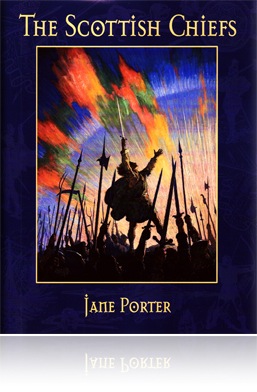
Scottish Chiefs - by Jane Porter
This magnificent book tells the story of the brave Scots who rebelled against the tyranny of King Edward during the period of 1296 - 1305. This inspiring tale of courage has been a favorite for generations of readers. The story of William Wallace, Robert the Bruce, and the brave Scots who stood up to English tyranny is sure to become a favorite!

The Magna Charta - by James Daugherty
It was Ben Franklin who coined the phrase, "Rebellion to tyrants is obedience to God," and if any historical drama fulfills that maxim, it is surely the saga of King John and the drafting of the Magna Charta. Out of the rich turbulence of English history, June 15, 1215 stands apart as a significant milestone in the progress of human liberty. On that day, a brave band of barons, led by the noble Stephen Langton, and calling themselves the Army of God, stood up to the wicked King John and demanded that he restore the ancient laws of England that he had so unabashedly trampled underfoot. The era is a rollicking one filled with colorful characters like Robin Hood and his Merry Men, Richard the Lionheart, Queen Eleanor of Aquitaine, and many more. Newbery and Caldecott medal-winner James Daugherty brings his own passion for freedom's story to this wonderful saga of the thirteenth century. Daugherty devotes the last part of the book to a history of the "documents" of freedom—what he calls the "Children of the Magna Charta"—demonstrating how liberty has progressed over the ages. Two-color illustrations by the author enhance the drama of this text.

The World of Columbus and Sons - by Genevieve Foster
This is the story of a wonderful, changing, reawakening world—the world of the Renaissance and Reformation. Measured by the lifetime of Columbus and his sons, this book spans the years from 1451-1539. With Columbus as the central figure of this narrative, readers will also learn the fascinating stories of Prince Henry the Navigator, Ivan III of Russia, Gutenberg, Queen Isabella, Leonardo da Vinci, Mohammed II, the African ruler Nomi Mansa, Martin Luther, Erasmus, Albrecht Dürer, Copernicus, Michaelangelo and many others. Told in Foster's engaging and winsome style enhanced by her helpful chronologies and timelines, readers will learn of the religious, cultural and scientific changes that ushered in a new frontier of exploration and discovery.


This period in history is so exciting and it is my hope that this full-color guide will open up new worlds to you and your students! It is a high school level course and the guide is structured to allow for you to personalize it to each student. It is formatted in 35 weekly lessons with reading assignments, mapping activities, research and discussion topics, hands-on and craft suggestions, vocabulary lists and much more. Knowing that each student is different, I have tried to set it up to allow you to personalize the study to your student's unique needs. Each assignment has been carefully constructed to provide opportunities for each student to personalize the study. One thing that I try to emphasize in the guide is the fact that it is a guide and it's supposed to make your job easier, not harder! It's chock full of ideas and activities but they're not all required. The focus should be the literature, not checking off every single activity. The activities are there to enrich your study, so pick and choose according to the educational needs and interests of your students. Have fun with it!"

Tuesday, February 05, 2013

King found buried under parking lot!

Richard III
Yesterday a story broke in England and it's an exciting one for anyone studying medieval history! The remains of Richard III, the last Plantagenet king to rule in England have been found. What makes this all so interesting is that the archeologists went on a treasure hunt that would rival any Indiana Jones storyline. Using historical documents, carbon dating, 500 year old maps, and even DNA testing, these archeologists have positively identified a skeleton as this widely reviled king.

Below you can watch two videos from the University of Leicester detailing the search for the remains and how they used historical accounts and detailed cultural knowledge to plan their dig.

The search for Richard III, the archaeological dig

This video shows the lengths to which the archaeologists had to go to determine if this was in fact Richard III. Using contemporary descriptions of the king along with carbon dating and DNA evidence they have been able to prove "beyond a doubt" that the skeleton is in fact this long-missing king. 
The search for Richard III, identifying the remains

You can read more about the search here and see a photograph of the entire skeleton. This discovery has even allowed a specialist in craniofacial identification at the University of Dundee to create a reconstruction of what Richard would have looked like! You can see that here.

I find all of this to be so fascinating. What do you think? If you're interested in learning more about Richard III, check out our Medieval History Through Literature study guides for high school and junior high. 

You may also enjoy these other blog entries featuring important historical discoveries or places:


Don't forget to check out our Facebook and Pinterest pages. And if you've enjoyed this, please feel free to share using the buttons below!

Thursday, September 27, 2012

Announcing Our New Medieval History Through Literature Study Guide for High School Students


It's finally here! After more than a year in research and writing we are excited to announce our newest study guide: Medieval History Through Literature for high school students. This guide takes the best elements of teaching history using literature and adds detailed notes for literary analysis, geography, vocabulary, and much more. Beginning with the fall of the Roman Empire and continuing through 1500, this curriculum covers over 1100 years of fascinating history. Students will read classics like Beowulf, The Song of Roland, Inferno, The Canterbury Tales, Marco Polo's fascinating travelogue, Boccaccio's observations of the bubonic plague in the Decameron and much more! Beginning with the writings of Augustine and continuing through Chaucer you will discover some of the most important literary pieces in the western tradition. Additionally, The Medieval World, the background text for the course, provides a broad and fascinating look at the social, moral, religious, political, and scientific shifts that occurred around the world during the era. Works such as One Thousand and One Arabian Nights, Scottish Chiefs, and The World of Columbus and Sons provide further depth to the study as students investigate the spread of Christianity and the emergence of Islam, the coming age of discovery, and the battles for independence that still affect our world today. 


Set up in 35 weekly lessons, this guide provides the structure necessary to get the most out of the literature while connecting it with historical events. Each lesson contains reading assignments, writing prompts, comprehension question designed to encourage critical thinking, vocabulary, geography, links to related websites, and much more. Additionally detailed notes on historical background and literary analysis are provided for Beowulf, The Song of Roland, Scottish Chiefs, The Divine Comedy, and The Canterbury Tales. Additional in-depth analysis of the three world religious, feudalism, and the great plague ensure students' comprehension of these essential topics. 


The study guide is available for immediate download. Get it here!


Below you can see the books required for the course:

In 5th century Denmark, a murderous monster stalks the night, and only the great prince of the Geats has the strength and courage to defeat him. The story of Beowulf's terrifying quest to destroy the foul fiend Grendel, his mother–a hideous sea-hag, and a monstrous fire-dragon, is the oldest surviving epic in English literature. Beautifully translated and updated by the brilliant linguist Seamus Heaney.
"A faithful rendering that is simultaneously an original and gripping poem in its own right." —New York Times Book Review


Lively, absorbing, often outrageously funny, Chaucer’s The Canterbury Tales is a work of genius, an undisputed classic that has held a special appeal for each generation of readers. The Tales gathers twenty-nine of literature’s most enduring (and endearing) characters in a vivid group portrait that captures the full spectrum of medieval society, from the exalted Knight to the humble Plowman. For advanced readers due to difficult language and mature content.

Very few people know that Mark Twain (Samuel Clemens) wrote a major work on Joan of Arc. Still fewer know that he considered it not only his most important but also his best work. He spent twelve years in research and many months in France doing archival work and then made several attempts until he felt he finally had the story he wanted to tell. He reached his conclusion about Joan's unique place in history only after studying in detail accounts written by both sides, the French and the English. Because of Mark Twain's antipathy to institutional religion, one might expect an anti-Catholic bias toward Joan or at least toward the bishops and theologians who condemned her. Instead one finds a remarkably accurate biography of the life and mission of Joan of Arc told by one of this country's greatest storytellers. The very fact that Mark Twain wrote this book and wrote it the way he did is a powerful testimony to the attractive power of the Catholic Church's saints. This is a book that really will inform and inspire.

Out of the rich turbulence of English history, June 15, 1215 stands apart as a significant milestone in the progress of human liberty. On that day, a brave band of barons, led by the noble Stephen Langton, and calling themselves the Army of God, stood up to the wicked King John and demanded that he restore the ancient laws of England that he had so unabashedly trampled underfoot. The era is a rollicking one filled with colorful characters like Robin Hood and his Merry Men, Richard the Lionheart, Queen Eleanor of Aquitaine, and many more. Newbery and Caldecott medal-winner James Daugherty brings his own passion for freedom's story to this wonderful saga of the thirteenth century. Daugherty devotes the last part of the book to a history of the "documents" of freedom—what he calls the "Children of the Magna Charta"—demonstrating how liberty has progressed over the ages. Two-color illustrations by the author enhance the drama of this text.

An anthology of over 150 great writings including works by Boethius, Bede, Peter Abelard, Geoffrey of Monmouth, Marie de France, Marco Polo, and many others. When used in our Medieval History Through Literature Study Guide high school students will read medieval poems, songs, ballads, prayers, religious works as well as excerpts from St. Augustine's Confessions, Dante's Inferno, The Song of Roland and many others. An excellent resource for everyone interested in medieval literature. "No better anthology exists." — Commonweal.

Sumptuously illustrating the vivid parade of a thousand years of history, this comprehensive historical atlas concentrates on the Mediterranean world but also shows what happened across the globe between A.D. 400 and 1500 —from the fall of Rome to the age of discovery. Every page glistens with period works of art, fascinating maps, quotes from medieval figures, close-ups of intriguing artifacts, and rich landscape photographs of the places where battles were fought and monarchs were crowned. For every century, a signature city is spotlighted to represent that era's developments. Time lines connect the many dramatic events that took place in these dark and exciting times, which continue to shape our world today. Written by a team of veteran National Geographic writers, this richly illustrated reference includes full index, reading list, and glossary.

A completely original version of the Arabian Nights by award-winning author Geraldine McCaughrean. In order to delay her inevitable execution, Queen Shahrazad tells her murdering husband, King Shahryar, a wonderfully exciting story every night. The brilliant storyteller preserves her life while relating tales of intrigue, adventure, and duplicity. A delightful window into the Persian world.

This magnificent book tells the story of the brave Scots who rebelled against the tyranny of King Edward during the period of 1296 - 1305. This inspiring tale of courage has been a favorite for generations of readers. The story of William Wallace, Robert the Bruce, and the brave Scots who stood up to English tyranny is sure to become a favorite!

This is the story of a wonderful, changing, reawakening world—the world of the Renaissance and Reformation. Measured by the lifetime of Columbus and his sons, this book spans the years from 1451-1539. With Columbus as the central figure of this narrative, readers will also learn the fascinating stories of Prince Henry the Navigator, Ivan III of Russia, Gutenberg, Queen Isabella, Leonardo da Vinci, Mohammed II, the African ruler Nomi Mansa, Martin Luther, Erasmus, Albrecht Dürer, Copernicus, Michaelangelo and many others. Told in Foster's engaging and winsome style enhanced by her helpful chronologies and timelines, readers will learn of the religious, cultural and scientific changes that ushered in a new frontier of exploration and discovery.

Don't forget to check out our Facebook and Pinterest pages. 
And if you've enjoyed this, please feel free to share using the buttons below! 

Monday, August 06, 2012

Introducing Youngsters to Medieval Classics

Hello!
In a previous blog post, I shared with you some of my favorite titles for introducing pieces of ancient literature to younger readers. As we talked about before works like Homer's Iliad and The Gallic Wars by Julius Casear can be intimidating and overwhelming when approached for the first time. Thankfully there are wonderful adaptions available for parents and teachers who want to expose their children and students to these works before high school and college. Today I am going to list some of my favorite adaptations of medieval works. By making your children familiar with the works of Chaucer, Shakespeare and other great writers you are giving them excellent tools for understanding the original works later on. Let's get started:


One Thousand and One Arabian Nights by Geraldine McCaughrean
McCaughrean's adaptations of the fantastical Arabian nights stories opens a world of intrigue and adventure to readers aged 10 and up. Based on stories from Persia, India, Egypt, Mesopotamia, and the Middle East your student will learn about the courageous and clever Shahrazad who says off a death sentence with her fantastical stories. You'll hear about the adventures of Sinbad and Ali Baba and Aladdin. Dating from the 10th Century, these stories offer a window into the world of the medieval Middle East, telling much about the beliefs of the people who valued these tales. McCaughrean's version eliminates some of the more sensual stories, favoring those appropriate for youngsters. 


Beowulf adapted by Michael Morpurgo and illustrated by Michael Foreman 
Not only is this adaptation of the oldest English epic poem beautifully written, its illustrations communicate all the drama and color of this exciting tale. Students will learn of the brave and young Beowulf and his battle against the hideous terror Grendel. Preserving much of the lyrical quality of the original, Morpurgo's version is engaging, fun, and expertly crafted. Appropriate for ages 8 and up. Some of the illustrations do portray bloodshed so it may be worth previewing the title for your children. 

Canterbury Tales by Geoffrey Chaucer, adapted by Barbara Cohen and illustrated by Trina Schart Hyman
It can rightly be said that it is thanks to Geoffrey Chaucer that the English language enjoys the prominence is does today. Chaucer took a language formerly thought of as vulgar and common and elevated it to a literary level. His tales are part of our language heritage as are many of the words we commonly use. Chaucer invented about 2000 English words! But many parents and teacher have resisted teaching Chaucer due to the fact that many of his tales are crude and contain material inappropriate for children. Thanks to Barbara Cohen's wonderful version of several of the Canterbury Tales young people can now enjoy the funny and lively stories. The book includes The Nun's Priest's Tale, The Pardoner's Tale, The Wife of Bath's Tale as well as The Franklin's Tale. These tales give life and color to medieval England and are wonderfully entertaining. I remember reading these stories and pouring over the details of Trina Schart Hyman's gorgeous illustrations. This book even accompanied me to college where I would refer to it when I ran into confusion reading the originals! This version is only available in hardback and is pricey but BFB is offering it for a discount here. 


Chanticleer and the Fox by Geoffrey Chaucer, adapted and illustrated by Barbara Cooney
One of Chaucer's most famous stories is that of the proud rooster Chanticleer. Cooney turns this wise tale into a wonderful children's book appropriate for little ones 5 and up. Her illustrations of the cocky cock and foxy fox earned her a Caldecott medal and make this a modern classic. 

Another English classic these tales are firmly established in the lexicon of western folklore. The stories of the sword in the stone, brave Sir Galahad, Lancelot, the Holy Grail–they're all familiar to us but many have not actually read the stories based on Thomas Mallory's Le Morte d'Arthur and other medieval classics. Roger Lancelyn Green's well-loved version preserves the frantic pace and neck-break randomness of the stories while providing readers with all the intrigue of the dark and foreboding forests of England. A must for all who are interested in medieval literature. 


Tales from Shakespeare by Charles and Mary Lamb
Undoubtedly the best-know and best-loved adaptation of Shakespeare's writings, the Lamb's version is a classic in and of itself. Originally published in 1807 this book has been introducing young readers to the joys of Shakespeare for over 200 years! Preserving the intricate plot-lines, brilliant characterization, and insight into the human condition that makes Shakespeare so great, this is the best resource for introducing the Bard to your students and children. It is even an excellent tool for getting more out of the original versions! Students will be able to read 21 of Shakespeare's greatest plays in prose without having to worry about keeping lines and characters straight. If you have never read Shakespeare yourself, read this first. It makes the originals so much more accessible!  


I hope you find this list helpful! I would love to hear about any adaptations you've particularly enjoyed or stories of using these resources to help open up the world of medieval literature to your children.