Thank you @UnexpectedHomeschoolers for sharing such a great view of our Around the World with Picture Books. If you have any questions, feel free to leave a comment and we'll get right back to you.

The Beautiful Feet Books, Inc., blog. Here you will find all the latest news as well as book reviews, articles, contests, giveaways, and more!
Wednesday, March 07, 2018
Around the World Part 1 Video Review
Thank you @UnexpectedHomeschoolers for sharing such a great view of our Around the World with Picture Books. If you have any questions, feel free to leave a comment and we'll get right back to you.


Wednesday, February 28, 2018
Announcing our Affiliate Program!

Love BFB? Love blogging and posting about us? We have an affiliate program! Click through the link below to learn how you can help us spread the joy of teaching history using the best literature available. We offer a generous affiliate schedule and bonuses. It's easy to set up and we can help you with custom banners or sidebars, ads, discount codes, giveaways, or specials. Visit the link below for all the details and to sign up: https://bfbooks.tapfiliate.com/
Friday, September 22, 2017
Teaching Early American History in a One-Room Schoolhouse
 |
| Photo from Wikipedia: By Josconklin |
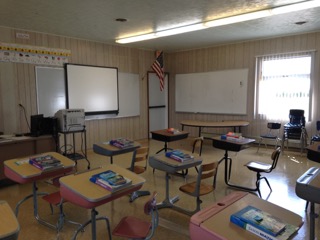
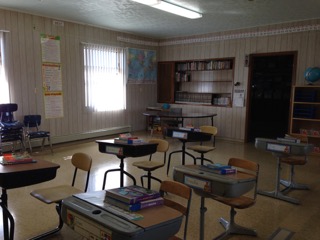
Walking into the one room K-8 classroom as a full-time teacher was a new experience for me. I had homeschooled my children for almost 20 years, so with my youngest in high school at the local public school, substitute teaching seemed like the perfect transition for me. When the school district called me in August and asked if I would be willing to teach at the Hutterite colony school full-time that year, I didn’t hesitate to say yes! Getting the call so close to the beginning of the school year left me very little time to prepare and was overwhelming. I decided to rely on what I knew and loved from my own homeschool. We would use the textbooks as our spine, but I would incorporate quality literature wherever I could and read aloud wonderful books every day.
 |
| Photo by Kimberly Winkowitsch |
I enjoyed teaching Hutterite children. Similar to other Anabaptist groups like the Amish and Mennonites, Hutterites believe in living modestly and simply. Where they differ from the others is in their communal lifestyle. They live in a colony with all things shared. Each family has their own home but meals are eaten together in a central cafeteria. They also worship together at daily church services. Their “English” school is actually a public school with a hired teacher in their school building.
 |
| Photo by Kimberly Winkowitsch |
It was going pretty well, but one day I noticed the younger students getting very bored with their social studies textbooks. James was fidgety and three times I had to remind Anna and Leona to get back to work. They were good and willing, but bored, and there was just no spark or hunger for the subject. I remembered afternoons of sitting on the couch in front of the fire with my children while I read Leif the Lucky or Columbus from their Beautiful Feet Books' Early American History for Primary Grades studies. They would do some work in their notebooks after read-aloud time and find places on a map. Sometimes we would supplement their studies by cooking a colonial dish or doing a craft project. THIS was what I wanted for my students. I had the books. Why didn’t I use them?
The next day, I brought in my entire D’Aulaire collection, my Your Story Hour CDs, the Early American History Timeline, and my teacher’s manual. While the older children worked at their desks, I grouped the younger students at a table and began reading Leif the Lucky to them.

Columbus and Pocahontas became real people for them, and not just some names in a textbook or on a test. Benjamin Franklin made their fuzzy concept of electricity and inventors come into focus in a natural way that was memorable and captured their interest. Abraham Lincoln wasn’t just some man from an old photo. He was a real person who had grown up in the wilderness and traveled for miles just to borrow a book. When he became president, it showed the limitless opportunities that were ours for being Americans. Little first grader Jana asked to borrow Leif the Lucky to read when we were done with it, so I let her take it to her desk. After each book was completed, the students would scramble to be the first to ask for the book to read. They had to take turns, but they chose those books for silent reading time again and again. The notebooks they created were beautiful keepsakes they could display for parent/ teacher

I wasn’t able that first year to fully incorporate the Early American History Intermediate study with the older students, so I used some of those books in my read aloud time. We read The Fourth of July Story, Squanto, Friend of the Pilgrims, and William Bradford: Pilgrim Boy. I brought in other books from the collection and had them available in the library for silent reading time. These great books were the perfect additions to their lessons.
I was so thankful to have experienced using this wonderful curriculum in my homeschool, and I loved being able to use it again in my classroom experience.
Thank you Kimberly for sharing this unique experience! If you have any questions, please feel free to post them in the comments.
*Names of the children have been changed to protect their identities.
Monday, August 28, 2017
Announcing our newest study: Around the World with Picture Books
Today Rea joins us on the blog to share about her newest study!
Dear Readers,
Dear Readers,
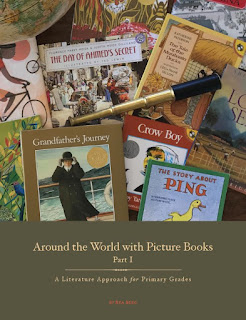
Thank you to all the friends and literature lovers who have waited patiently for this new study to be available! It has been quite a labor of love, and it is my fond hope that you and your students will have as many happy, enriching, and rewarding times with it, as I have!
So . . . Here goes! Around the World with Picture Books Part I is designed to be a notebook approach to world cultures and geography for the primary student. (Part II will cover South America and Europe and is slated for Winter/Spring 2018). Using beloved children’s books, this guide includes nature study, folk tales, fables, art, poetry, history, and gentle Socratic questions to prompt discussion and discovery. Geographic elements include country maps and flags for students to cut out, paint, or color. The beautifully illustrated Maps by Aleksandra Mizielińska and Daniel Mizieliński acts as the spine of the study and there will be few students that don’t love geography after encountering this work. Beautiful drawings of indigenous animals are included for each country, and will familiarize students with some remarkable creatures, cultivating respect and wonder for the natural world. As the student compiles these elements in a journal, he creates a memorable keepsake recording all he is learning.

When we visit Australia, make this gorgeous Pavlova—a dreamy dessert for which we can thank the Aussies and Anna Pavlova, a famous ballerina!
Part One covers Asia, Antarctica, Australia, and Africa. In Asia, we explore China, Japan, Thailand, and India. In Africa, we visit Morocco, Egypt, Kenya, Tanzania, and Ghana. Each country visited includes additional picture book suggestions as well as biography and history recommendations. Chapters conclude with a fun foray into the cuisine of the country with recipes, photos, and links to create a memorable evening experiencing unique culinary creations from around the world—a perfect time for students to relate to family and friends all that they’ve learned.
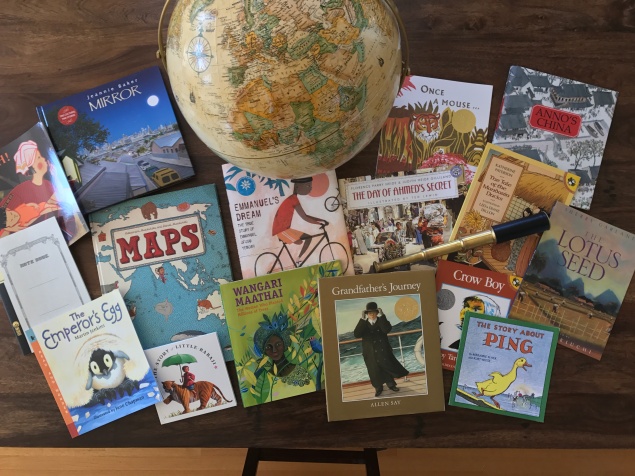
The Literature
All of the books chosen for this study are either classic works, award-winning books, or newer selections that have achieved some critical acclaim. As a primary-level study, the book notes presented here are simple and straightforward with comprehension questions designed to enhance and draw out some of the subtleties or nuances of the books. Most selections included in this guide can stand quite well on their own. The best literature tends to inspire the student’s interest and curiosity to bubble up naturally and often notes are not necessary.
Nature Studies
Children take to the study of nature with keen interest and delight. The animals featured in this guide were chosen for their appeal to primary students. Helpful websites and links are included for each animal.
Researching a few remarkable facts about each of the creatures will help cultivate a child’s sense of wonder at the marvels of the natural world; allow time to ponder the spectacles of perfect symmetry, function, and design. Even the tiniest creature reveals something marvelous about the mind of the Creator and should inspire awe and reverence.
Notebooking
 The notebooks that are included in the Around the World with Picturebooks Pack have been specially chosen for the quality they will bring to your student’s journaling experience. Imported from Japan, the Tsubame Fools Note Book is made from acid-free paper that is beautifully smooth to the touch, does not bleed through, and is lined for beginning writers but can accommodate a student working on cursive as well. With a sewn binding, this notebook lays perfectly flat wherever it is opened, significantly facilitating all the writing and pasting work in the course.
Finally, Around the World with Picture Books Part I goes to the press in just a few days, as we make all the final touches! The good news is that we have a download available now of the first two chapters—China and Japan. This includes all the lessons, geography, history and biography connections, art connections and nature studies. *Customers who purchase the Study Guide or Pack now will receive the download version of the Study Guide by the end of August as well as the print version around the beginning of October. You will also be emailed the first two chapters upon purchase. You can purchase Around the World in Picture Books now to receive the preview chapters and we also offer a book pack! Happy travels!
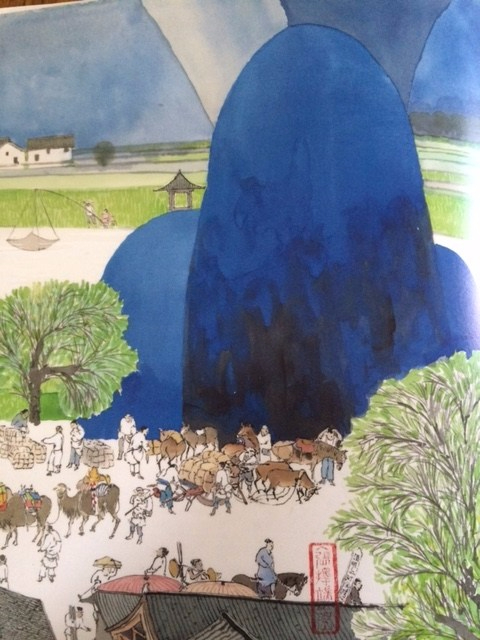
From Anno’s China a scene from the beautiful Guilan province in China. Just one of many scenes visited in Around the World with Picture Books!
Tuesday, August 15, 2017
Fighting Fear and Hatred with Story

by Rebecca Manor
Over the past few months I've adopted a bit of an ostrich approach to the news. I haven't been
checking Facebook or reading the news, finding it too sad, too depressing, too disempowering. I've been focusing my attention homeward and but over the weekend I could no longer ignore the news as friends in Charlottesville alerted me to the heartbreaking events of this past weekend. I don't come here today to make any political statements as many have more eloquently denounced the hate and evil on display. I echo their voices and wish to empower you as parents. Within our homes we have the power to fight the hate and anger we saw displayed so vividly this past weekend. We have the ability to shape a generation that can listen with empathy, can live with the light of eternity coloring their vision, and can hold tight to that future seen by John, "After this I looked, and there before me was a great multitude that no one could count, from every nation, tribe, people and language, standing before the throne and before the Lamb." Stories open up space in our hearts to listen to people who have lived lives different from our own. Stories tear down walls because we are no longer able to hide behind our prejudices when we are forced to confront the truth. Beautifully written fictional stories like The Hundred Dresses gently open up opportunities to discuss prejudice with our little ones. Miss Rumphius plants seeds of beauty in tender little hearts and inspires the desire to leave behind a legacy of graciousness. Amos Fortune paints an eloquent picture of the unwavering strength of true humility. Reading books that relate the first-hand experiences of enslaved people opens our eyes to this evil that tragically still exists nearly everywhere. And, of course, scripture reminds us that relinquishing our rights is right and exactly what our Savior did. Giving our children opportunities to hear from people whose life experiences are vastly different from our own reveals struggles we can only imagine. The tales of men and women who stood firm against evil can inspire bravery in our families as we decide to stand up against both great and small evils in our every day choices.
What we all saw over the weekend is part of the fallen human condition. Ultimately, as a Christian I believe the only permanent solution is the return of Jesus, but I also know that the sin of hatred grows most quickly in a mind without imagination. Imagination allows us to enter into experiences we cannot live ourselves. The beauty of a well-developed imagination is its ability to give us a taste for what others experience in their daily lives. Combining a curiosity and desire to know more about all people with the ability to imagine their reality is a powerful weapon against prejudice.
Reading stories with our children also allows us to confront evil as we encounter it in the books we read. Whether it's an epic historical struggle like World War II, or the evils of racist depictions of people, or tales of cruelty, providing a context in which to discuss these realities with our children in age-appropriate ways helps them prepare to confront them in real life. If a child is raised to adulthood without an understanding of the reality of evil and the power we have to defeat it, he will encounter a world full of unsurmountable threats and dangers. The irony of a protectionist approach to raising children is that it fails to prepare them to confront depravity, both inside their hearts and outside their front doors. This is not to say that childhood should be filled with tales of awfulness. I firmly believe in fiercely protecting childhood. It's more of an encouragement to read, read, read! As G. K. Chesterton so eloquently stated in Tremendous Trifles, 1909:
Fairy tales, then, are not responsible for producing in children fear, or any of the shapes of fear; fairy tales do not give the child the idea of the evil or the ugly; that is in the child already, because it is in the world already. Fairy tales do not give the child his first idea of bogey. What fairy tales give the child is his first clear idea of the possible defeat of bogey. The baby has known the dragon intimately ever since he had an imagination. What the fairy tale provides for him is a St. George to kill the dragon.Exactly what the fairy tale does is this: it accustoms him for a series of clear pictures to the idea that these limitless terrors had a limit, that these shapeless enemies have enemies in the knights of God, that there is something in the universe more mystical than darkness, and stronger than strong fear.Read fairy tales to fire up those imaginations. Read authentic historical accounts that portray historical characters in all their good and bad characteristics. Read books that grow your child's world and mind. This is one of the many ways we can stand against sin and evil and show our children what it means to love boldly.
We would love to hear what you think! Chime in below in the comments section and share your thoughts. Don't forget to check out our Facebook and Pinterest pages. To learn more about Beautiful Feet Books, click here.
And if you've enjoyed this, please feel free to share using the buttons below:
Monday, July 31, 2017
$300.00 Giveaway! CLOSED

THIS GIVEAWAY IS OVER. THANK YOU FOR ALL YOUR ENTRIES!
We are so excited to offer three of you a chance to win a $100.00 gift certificate to Beautiful Feet Books! Just in time to order your curriculum for next year. To enter, simply review a Beautiful Feet Books product on our website or one of the following websites and comment below with the link to the review. You can post reviews on all of the sites for extra entries. To enter, review any of our study guides or books at bfbooks.com, Google+, Homeschool Reviews, and/or on our Facebook page. Just click the hyperlinks and you'll be taken right where you need to be to leave a review. Then, once your review has posted, comment below with the link and you'll be entered. You can post your review once on each site for additional entries and you can review more than one product for even more entries. We are running this giveaway for one week so get your entries in by next Sunday night. You MUST comment on this blog entry with a link or links to your reviews! Winner will be announced next week.
Here are some of our programs you may want to review:
1. NO PURCHASE NECESSARY
 |
| Modern American and World History |
 |
| Early American History for Intermediate Grades |
 |
| Early American History for Primary Grades |
 |
| Teaching Character Primary Reading Pack |
 |
| History of Science |
 |
| Modern U.S. and World History for High School |
 |
| History of Classical Music |
 |
| A Child's First Book of American History |
 |
| The d'Aulaire Biographies |
Terms and Conditions
1. NO PURCHASE NECESSARY
2. Eligibility requirements: entries must be from persons over the age of 18.
3. Giveaway begins on 7/31/2017 and ends at 12:01AM on 8/6/2017.
4. Odds of winning: the number of eligible entries received determines the odds of winning.
5. Beautiful Feet Books bears no liability for technical failures or typographical errors.
6. Winner will be selected randomly from eligible entries on 8/7/2017 and will be notified on the blog within 24 hours. Winners have six months to claim their prize.
7. This giveaway is sponsored by Beautiful Feet Books, Inc. Contact at: letters@bfbooks.com or 800.889.1978
8. VOID WHERE PROHIBITED BY LAW.
We would love to hear what you think! Chime in below in the comments section and share your thoughts. Don't forget to check out our Facebook and Pinterest pages. To learn more about Beautiful Feet Books, click here.
And if you've enjoyed this, please feel free to share using the buttons below:
Tuesday, July 25, 2017
Medieval History: A Literature Approach for High School

This study is a journey through some of the best original source material available and is sure to spark your student's curiosity and imagination. Although many people have been taught that the period from 300 to 1522 A.D. was marked by darkness, ignorance, and struggle, this guide will show you that the opposite is true! Rich period literature will show you that it was a time when people were forming ideas that still impact us today. It was also a time of exciting discoveries, new innovations, and wonderful stories. Reading Beowulf will open student's eyes to the terrors of living under the threat of Viking raids. The Song of Roland provides a glimpse into the mores and ethics of a time where the concepts of chivalry were just developing. The story of William Wallace reveals a passionate love of liberty that we still find heroic today. You will also accompany Marco Polo on his travels through Asia, witnessing sights never imagined by the western mind. Songs, hymns, and creeds will give you insight into the religious beliefs of people who lived over 1500 years ago! In this course students will learn about King John, King Arthur, Saladin, Queen Eleanor, Joan of Arc, Shahrazad, Marco Polo, Peter Abelard, Geoffrey Chaucer and many others. They will learn about Martin Luther who revealed a new way to approach God and about John Wycliffe who organized the Bible. Students will read about the life of Columbus, whose discovery of North America changed the world forever. By reading some of the best literature on the subject, students will be encouraged to discuss new ideas and social changes. Links to websites, hands-on activities, discussion questions, mapping activities and much more will bring the Middle Ages to life. Set up in 35 weekly lessons, this study guide provides everything you need to complete an exciting literature based history course.
Here's a listing of the literature used in this course, including our new Medieval Anthology, produced specifically to go with this study. All items are available in our discounted Medieval History Senior High Pack.

An Anthology of Medieval Literature - edited by Rebecca Berg Manor
Beautiful Feet Books and Rebecca Manor's Anthology of Medieval Literature traces the development of thought and culture in Europe from the fourth century up through the 1300s. Beginning with excerpts of Augustine's Confessions and culminating with selections from Dante's Divine Comedy, students will trade medieval culture from the beginnings of Christendom to the Age of Exploration. Selections from major works such as The Song of Roland, Marco Polo's Book of Wonders, and The Deeds of Charlemagne are included along with poems, creeds, hymns, and selections from medieval thinkers like Peter Abelard and Thomas Aquinas. For use with the Beautiful Feet Books' Literature Approach to Medieval History study guide, this anthology will provide high school level students with an introductory survey of some of the greatest literature works of western civilization.

The Medieval World: An Illustrated Atlas - edited by John M. Thompson
Sumptuously illustrating the vivid parade of a thousand years of history, this comprehensive historical atlas concentrates on the Mediterranean world but also shows what happened across the globe between A.D. 400 and 1500 —from the fall of Rome to the age of discovery. Every page glistens with period works of art, fascinating maps, quotes from medieval figures, close-ups of intriguing artifacts, and rich landscape photographs of the places where battles were fought and monarchs were crowned. For every century, a signature city is spotlighted to represent that era's developments. Time lines connect the many dramatic events that took place in these dark and exciting times, which continue to shape our world today. Written by a team of veteran National Geographic writers, this richly illustrated reference includes full index, reading list, and glossary.

Beowulf: A New Verse Translation - by Seamus Heaney
In 5th century Denmark, a murderous monster stalks the night, and only the great prince of the Geats has the strength and courage to defeat him. The story of Beowulf's terrifying quest to destroy the foul fiend Grendel, his mother–a hideous sea-hag, and a monstrous fire-dragon, is the oldest surviving epic in English literature. Beautifully translated and updated by the brilliant linguist Seamus Heaney.
"A faithful rendering that is simultaneously an original and gripping poem in its own right." —New York Times Book Review
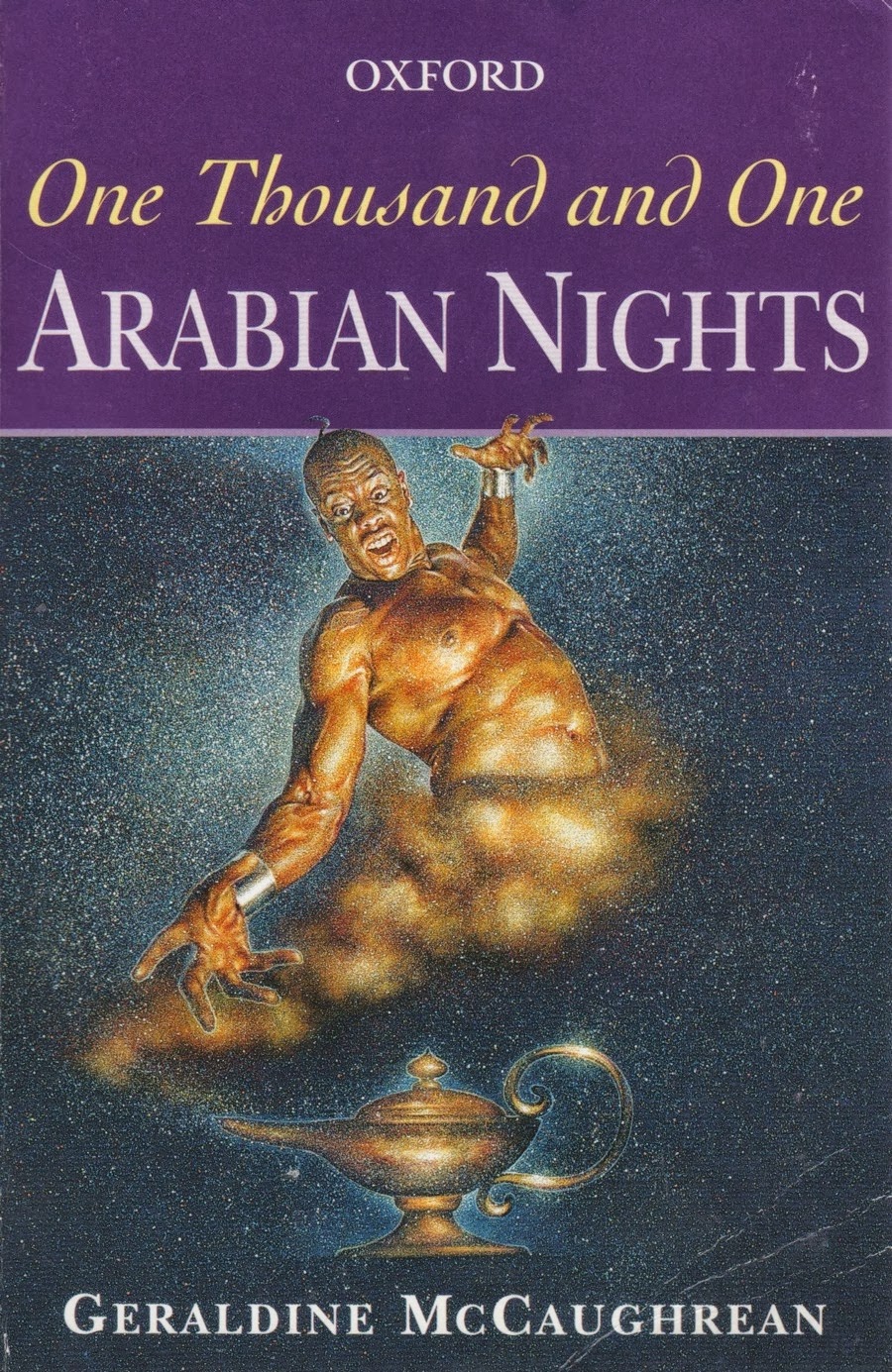
One Thousand and One Arabian Nights - Geraldine McCaughrean
A completely original version of the Arabian Nights by award-winning author Geraldine McCaughrean. In order to delay her inevitable execution, Queen Shahrazad tells her murdering husband, King Shahryar, a wonderfully exciting story every night. The brilliant storyteller preserves her life while relating tales of intrigue, adventure, and duplicity. A delightful window into the Persian world.
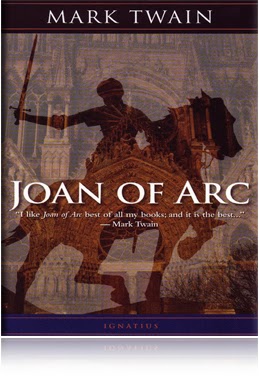
Joan of Arc - by Mark Twain
Very few people know that Mark Twain (Samuel Clemens) wrote a major work on Joan of Arc. Still fewer know that he considered it not only his most important but also his best work. He spent twelve years in research and many months in France doing archival work and then made several attempts until he felt he finally had the story he wanted to tell. He reached his conclusion about Joan's unique place in history only after studying in detail accounts written by both sides, the French and the English. Because of Mark Twain's antipathy to institutional religion, one might expect an anti-Catholic bias toward Joan or at least toward the bishops and theologians who condemned her. Instead one finds a remarkably accurate biography of the life and mission of Joan of Arc told by one of this country's greatest storytellers. The very fact that Mark Twain wrote this book and wrote it the way he did is a powerful testimony to the attractive power of the Catholic Church's saints. This is a book that really will inform and inspire.

Canterbury Tales - by Geoffrey Chaucer
Lively, absorbing, often outrageously funny, Chaucer’s The Canterbury Tales is a work of genius, an undisputed classic that has held a special appeal for each generation of readers. The Tales gathers twenty-nine of literature’s most enduring (and endearing) characters in a vivid group portrait that captures the full spectrum of medieval society, from the exalted Knight to the humble Plowman. For advanced readers due to difficult language and mature content.

Scottish Chiefs - by Jane Porter
This magnificent book tells the story of the brave Scots who rebelled against the tyranny of King Edward during the period of 1296 - 1305. This inspiring tale of courage has been a favorite for generations of readers. The story of William Wallace, Robert the Bruce, and the brave Scots who stood up to English tyranny is sure to become a favorite!

The Magna Charta - by James Daugherty
It was Ben Franklin who coined the phrase, "Rebellion to tyrants is obedience to God," and if any historical drama fulfills that maxim, it is surely the saga of King John and the drafting of the Magna Charta. Out of the rich turbulence of English history, June 15, 1215 stands apart as a significant milestone in the progress of human liberty. On that day, a brave band of barons, led by the noble Stephen Langton, and calling themselves the Army of God, stood up to the wicked King John and demanded that he restore the ancient laws of England that he had so unabashedly trampled underfoot. The era is a rollicking one filled with colorful characters like Robin Hood and his Merry Men, Richard the Lionheart, Queen Eleanor of Aquitaine, and many more. Newbery and Caldecott medal-winner James Daugherty brings his own passion for freedom's story to this wonderful saga of the thirteenth century. Daugherty devotes the last part of the book to a history of the "documents" of freedom—what he calls the "Children of the Magna Charta"—demonstrating how liberty has progressed over the ages. Two-color illustrations by the author enhance the drama of this text.

The World of Columbus and Sons - by Genevieve Foster
This is the story of a wonderful, changing, reawakening world—the world of the Renaissance and Reformation. Measured by the lifetime of Columbus and his sons, this book spans the years from 1451-1539. With Columbus as the central figure of this narrative, readers will also learn the fascinating stories of Prince Henry the Navigator, Ivan III of Russia, Gutenberg, Queen Isabella, Leonardo da Vinci, Mohammed II, the African ruler Nomi Mansa, Martin Luther, Erasmus, Albrecht Dürer, Copernicus, Michaelangelo and many others. Told in Foster's engaging and winsome style enhanced by her helpful chronologies and timelines, readers will learn of the religious, cultural and scientific changes that ushered in a new frontier of exploration and discovery.
Here's a note from the author: Rebecca Berg Manor:
This period in history is so exciting and it is my hope that this full-color guide will open up new worlds to you and your students! It is a high school level course and the guide is structured to allow for you to personalize it to each student. It is formatted in 35 weekly lessons with reading assignments, mapping activities, research and discussion topics, hands-on and craft suggestions, vocabulary lists and much more. Knowing that each student is different, I have tried to set it up to allow you to personalize the study to your student's unique needs. Each assignment has been carefully constructed to provide opportunities for each student to personalize the study. One thing that I try to emphasize in the guide is the fact that it is a guide and it's supposed to make your job easier, not harder! It's chock full of ideas and activities but they're not all required. The focus should be the literature, not checking off every single activity. The activities are there to enrich your study, so pick and choose according to the educational needs and interests of your students. Have fun with it!

We hope you find this helpful. Please never hesitate to contact us with any questions. We can be reached at 800.889.1978, letters@bfbooks.com, on Facebook, and Instagram.

We hope you find this helpful. Please never hesitate to contact us with any questions. We can be reached at 800.889.1978, letters@bfbooks.com, on Facebook, and Instagram.
Subscribe to:
Posts (Atom)